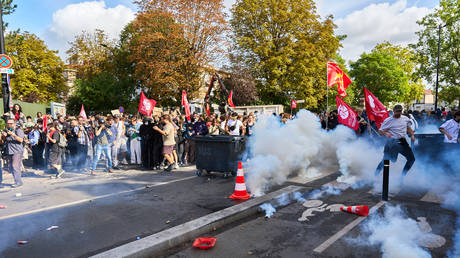
The Metropolitan Police have a massive headache on their hands, and it's getting worse by the day. Officers are openly clashing with activist groups over a planned student demonstration in central London, forcing everyone to look closely at where free expression crosses the line into intimidation.
The core issue? Pro-Palestinian student groups—operating under the banner of the University of London Coalition—have scheduled a major march for October 7. If that date sounds heavy, it's because it marks the grim third anniversary of the Hamas attacks on Israel. The planned route cuts straight through central London, moving from King's College London to University College London.
Deputy Assistant Commissioner James Harman didn't mince words when addressing the public. The Met is officially urging organizers to pick a different date. The reasoning comes down to safety, community anxiety, and the profound distress such a demonstration will cause Jewish students and staff on campuses that are already deeply tense.
Why the October 7 Date Matters So Much
You can't look at this situation through a standard lens of routine campus activism. October 7 isn't just another day on the calendar. For many Londoners, and specifically for the capital's Jewish communities, it's a date of acute mourning and reflection.
When a protest march is deliberately pinned to an anniversary of mass casualties and terror, the psychological impact on minority student bodies multiplies exponentially. Police leadership recognizes this reality. Recent months have already seen spikes in antisemitic incidents across higher education institutions in the UK, making campuses a fragile battleground.
Yet, managing these events is a bureaucratic and legal nightmare for the force. Officials have stated they are struggling to track down specific, identifiable organizers willing to step forward and take formal responsibility for the event. Despite attempts to open lines of communication, the leadership behind the University of London Coalition remains largely opaque, leaving law enforcement scrambling to negotiate a change of plans in the blind.
The Legal Limits of Police Power
People often wonder why the police don't just ban these marches outright. It's a fair question if you're unfamiliar with British public order laws.
Under current legislation, the Met cannot simply wave a hand and cancel a protest because it's controversial or deeply upsetting. The threshold for banning a static protest or a moving march is exceptionally high. Police must prove there is a serious, imminent risk of public disorder that cannot be managed through ordinary policing resources. Even then, the power to prohibit a march doesn't sit with the police commissioner alone—it requires formal sign-off from the Home Secretary.
Instead, the force has taken to writing open letters, holding press briefings, and leaning heavily on university administrators to intervene. The police have explicitly reminded institutions like KCL and UCL of their legal duty to ensure Jewish students and staff can study and work without enduring harassment or discrimination.
What Universities Are Facing Right Now
Higher education leaders are trapped in an impossible position. On one hand, universities pride themselves on being bastions of free speech, academic debate, and robust political engagement. Students have historically used campus protests to challenge foreign policy, demand institutional divestment, and voice solidarity with global movements.
On the other hand, university executive boards carry a strict legal duty of care toward their entire student body. When a campus becomes a launchpad for a polarizing march on a deeply painful anniversary, the line between political expression and a hostile campus environment gets completely blurred.
If the student groups refuse to budge and keep the October 7 date locked in, the operational policing costs will be astronomical. Thousands of officers will be pulled away from routine local policing to chaperone a flashpoint march through central London.
The tension highlights a deeper fracture in how public order is managed in the UK today. When free speech advocacy collides directly with community safety and historical trauma, there are no clean compromises left. Watch how university leaders respond over the next few days, because this standoff is going to set a major precedent for how future campus demonstrations are handled.