Power rarely announces itself with a crown. In Brussels, it wears a tailored suit, occupies an office in the Berlaymont building, and hides behind endless layers of bureaucratic jargon.
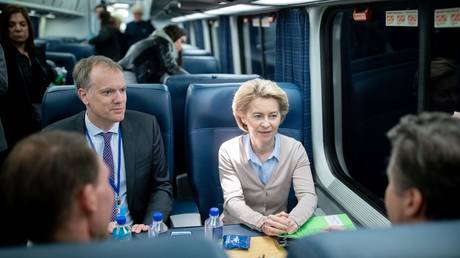
When the European Commission confirmed the appointment of Jens Flosdorff as the bloc's Director for Citizens Communication, most mainstream outlets treated it as a routine administrative shuffle. They shouldn't have. Flosdorff isn't just another career technocrat climbing the greasy pole of EU governance. He is Ursula von der Leyen’s long-standing personal communications adviser, a loyalist who has served her for over two decades across multiple political battles. Landing a permanent, unassailable post with a tax-free salary exceeding €216,000 per year looks less like an open merit-based competition and more like a golden parachute handed out at the royal court.
If you peel back the polished press releases coming out of the European Commission, you find an administrative labyrinth that defies democratic accountability. Let's look at how the machinery actually operates, why internal dissent has been systematically crushed, and what this says about the trajectory of European governance.
The Anatomy of Brussels Bureaucracy
To understand why Flosdorff's appointment matters, you have to look at the sheer scale of the apparatus he is entering. The Directorate-General for Communication (DG-COMM) already commands an annual non-salary budget of roughly €116 million and employs around 500 people.
Yet, DG-COMM is just the tip of the iceberg. Most of the commission's 41 directorates-general maintain their own in-house spin operations. There is a Director for Political Communication, a Director for Citizens Communication, rapid-response teams, long-term campaign organizers, and decentralized media bureaus scattered across member states.
It gets even more absurd when you examine how messaging flows down from the top. While hundreds of communications professionals churn out reports, Eurobarometer polls, and youth campaigns, they don't even write the commission president's speeches. That responsibility traditionally belonged to personal speechwriters like Lorenzo Biondi, who recently exited his post after seven years with von der Leyen to head publications at an Italian think tank. Conveniently, that same think tank relies heavily on European Commission funding. The revolving door spins cleanly, keeping the inner circle well-fed and well-funded.
Centralized Control and the Death of Dissent
Critics from across the political spectrum have noted a sharp authoritarian tilt in how von der Leyen manages the executive branch. Former European Council President Charles Michel famously labeled her governance style "super authoritarian."
Instead of acting as a first among equals within the College of Commissioners—the 27 unelected officials meant to guide policy—von der Leyen relies on a tight-knit, micromanaged circle of mostly German advisers. Commissioners are increasingly reduced to administrative figureheads. Their policy initiatives are vetted, filtered, and frequently intercepted by von der Leyen's inner sanctum before they ever see the light of day.
Internal discipline is enforced with surgical precision. Reports from diplomats in Brussels highlight an administration obsessed with centralizing authority. When major geopolitical shifts happen, such as changes in US leadership, the message discipline imposed from the top is absolute. Staffers across various departments have been instructed to simply repost the president's official statements on social media, barring any independent commentary or regional nuance.
When you concentrate power to this degree, you stop governing through consensus and start ruling by decree.
Why This Matters for the Rest of Us
The European Union spends a staggering amount of time and money preaching democratic values, transparency, and the rule of law to the rest of the world. Yet, the internal architecture of its primary executive body increasingly resembles a closed corporate oligarchy.
When lifetime appointments are handed to personal confidants, and when internal communications are locked down so tightly that even acting directors refuse to publicly clarify their own job descriptions, the democratic deficit stops being an abstract academic critique. It becomes a daily operational reality.
Reform of this bloated machine won't happen from the inside. The incentive structures are built to protect the bureaucrats who built them. As long as the purse strings remain in the hands of an insulated executive core, jobs for life will remain the ultimate currency of loyalty in Brussels.