You walk into a classroom where thirty-five teenagers share a space built for twenty. The roof leaks during autumn rainstorms. Textbooks are so outdated they miss entire geopolitical shifts, and sometimes, a crucial class goes without a teacher for a whole academic year. This isn't a neglected facility in a remote corner of the globe. It's a typical high school in France right now.
When hundreds of French schools shuttered their gates as students launched massive blockades and street protests, outsiders scratched their heads. But if you talk to the kids marching outside, you realize this anger has been simmering for years. It's not a sudden tantrum. It's a desperate cry from a generation watching their public education system crumble.
What’s Actually Driving the French Student Protests?
Let's look past the dramatic headlines of burning trash cans and police sirens. The root cause is simple neglect. Students across Paris, Marseille, Toulouse, and Strasbourg are fed up with systemic underfunding.
Overcrowded classrooms are just the tip of the iceberg. Pupils face overloaded timetables, extreme heatwaves in buildings without air conditioning, and chronic teacher shortages. Fifteen-year-old Simon, standing outside Turgot high school in central Paris, put it bluntly: "For a whole year, we didn't have a science teacher. We don't have any textbooks. And still, we're the lucky ones. It's even worse in the suburbs."
When infrastructure breaks down completely, frustration boils over. What starts as peaceful demands for better learning conditions quickly shifts into volatile standoffs when local authorities respond with heavy-handed policing rather than dialogue.
How Peaceful Demands Shifted Into Urban Violence
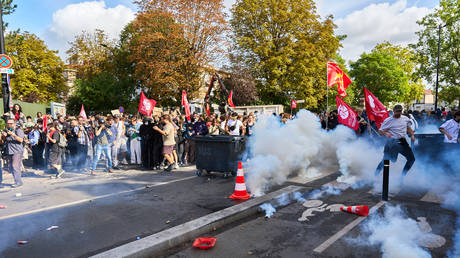
Things escalated fast. Around 400 schools have been forced to close as demonstrations turned chaotic. Tear gas canisters, rubber projectiles, and street blockades became common sights outside school entrances.
You've got thousands of teenagers aged fifteen to eighteen taking to the streets, setting up makeshift barricades with school desks and burning bins. In response, riot police have moved in aggressively. Thousands of arrests have piled up, with the vast majority being minors taken into police custody.
Critics and student unions argue that the state's heavy response only adds fuel to the fire. When officers deploy tear gas near teenagers demanding textbooks, it doesn't calm anyone down. It turns a budgetary dispute into a full-scale social crisis. Teachers have even stepped into the streets to form human chains between riot squads and their students, trying to protect kids from police brutality.
The Political Firestorm Behind the Unrest
Timing is everything in politics. With a presidential election looming just over the horizon, the protests carry massive political weight.
The government has openly pointed fingers at the hard-left France Unbowed party, accusing them of encouraging the unrest for political gain. Meanwhile, opposition politicians argue that the administration's chronic failure to invest in public services is the real culprit. Justice officials are even demanding that parents be held legally and financially liable for any property damage caused by their protesting children.
Blaming parents or opposition parties misses the forest for the trees. You can't ignore crumbling classrooms, missing educators, and deteriorating infrastructure for decades and expect teenagers to stay quiet forever.
Where the System Goes From Here
Fixing this mess requires more than temporary police deployments and emergency cabinet meetings. Throwing teenagers into holding cells doesn't replace missing science teachers or fix leaking roofs.
The government has to address the core grievances directly. Pumping real resources into public education, hiring more staff, and modernizing decaying facilities are non-negotiable steps. Until the state treats public schooling as an investment rather than an expense line to be slashed, these fiery demonstrations will remain a regular feature of French civic life. Stop ignoring the foundational cracks in the system, and the streets will finally quiet down.