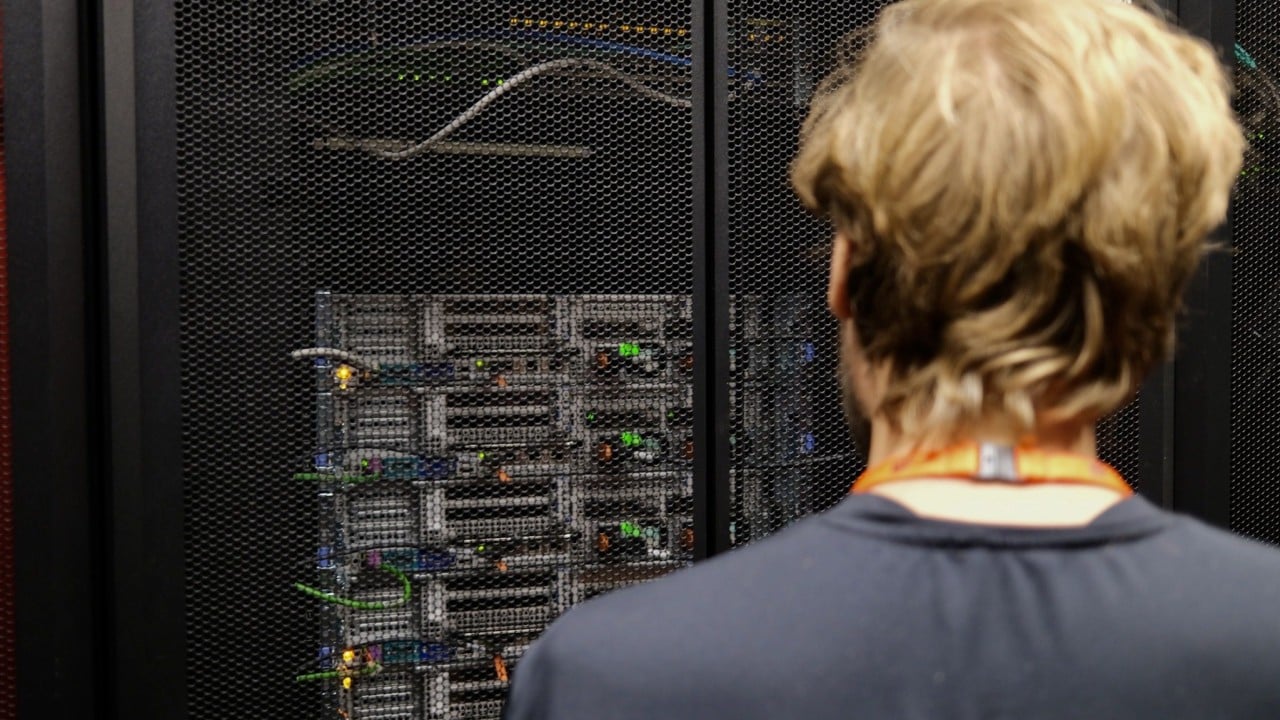
Trust is in short supply between Washington and Beijing. When world leaders sit down to talk about artificial intelligence safety agreements, they face a glaring problem. You can't just take another superpower's word for it.
Without concrete ways to monitor compliance, any cross-border treaty on AI limits is basically worthless. That is why a tiny group of researchers and specialized start-ups are racing to build the underlying architecture of AI verification.
The entire global community working on these technical solutions features roughly 50 people. That is a shockingly small number given the stakes. But their work will determine whether future international accords survive past the signature ceremony.
What Real AI Verification Actually Means
People assume checking compliance means opening up foreign data centers and inspecting every single chip. That will never fly. National security and corporate secrets mean neither the United States nor China will ever grant direct physical or digital access to their crown jewels.
Instead, verification has to happen from a distance. Specialists like Tom Milton at Amodo Design point out two core challenges. First, you have to prove whether a massive data center cluster is actively training a brand-new model from scratch or just serving inference requests for an existing one. Second, you have to verify that the deployed model running in production actually matches what was officially declared.
If a rival nation agrees to cap compute thresholds for frontier training runs, you need a mechanism to verify that promise without peering behind closed doors. That requires moving away from pure trust and building cryptographic and technical guardrails.
The Technical Tools Taking Shape
A few early-stage ventures are testing how this might work in practice. They aren't waiting for a grand diplomatic breakthrough.
Take Israeli start-up Attestable. They rely on zero-knowledge proofs. This cryptographic method lets an independent party verify that a specific output came from a designated AI model without revealing the underlying model weights or proprietary data sets.
Other groups are exploring recomputation. This technique runs identical inputs across a separate system to check if a specific output matches expectations. Lucid Computing recently began a test phase on a cluster of Nvidia H100 chips in Sweden via the state research institute RISE. Other firms like Amodo Design are eyeing trials on larger clusters.
Yet, scaling these solutions remains a massive headache. Testing on a modest cluster of sixteen or one hundred chips is miles away from auditing a cutting-edge facility housing over one million graphics processing units.
The Hurdles Ahead
Building an inspection regime for artificial intelligence mimics the old nuclear arms control playbook, but with a twist. Nuclear material has mass and leaves physical signatures. Algorithms are weightless. They can be duplicated, hidden behind shell companies, or shunted across regional gray markets using proxy transfer stations.
Governments must decide if they are willing to fund independent research into verification tools. Programs modeled after defense research agencies could accelerate the hardware and software testing needed to make verification viable.
Until those tools scale up, any diplomatic handshake over artificial intelligence limits remains an exercise in wishful thinking. If you want real compliance, you need code that proves it.