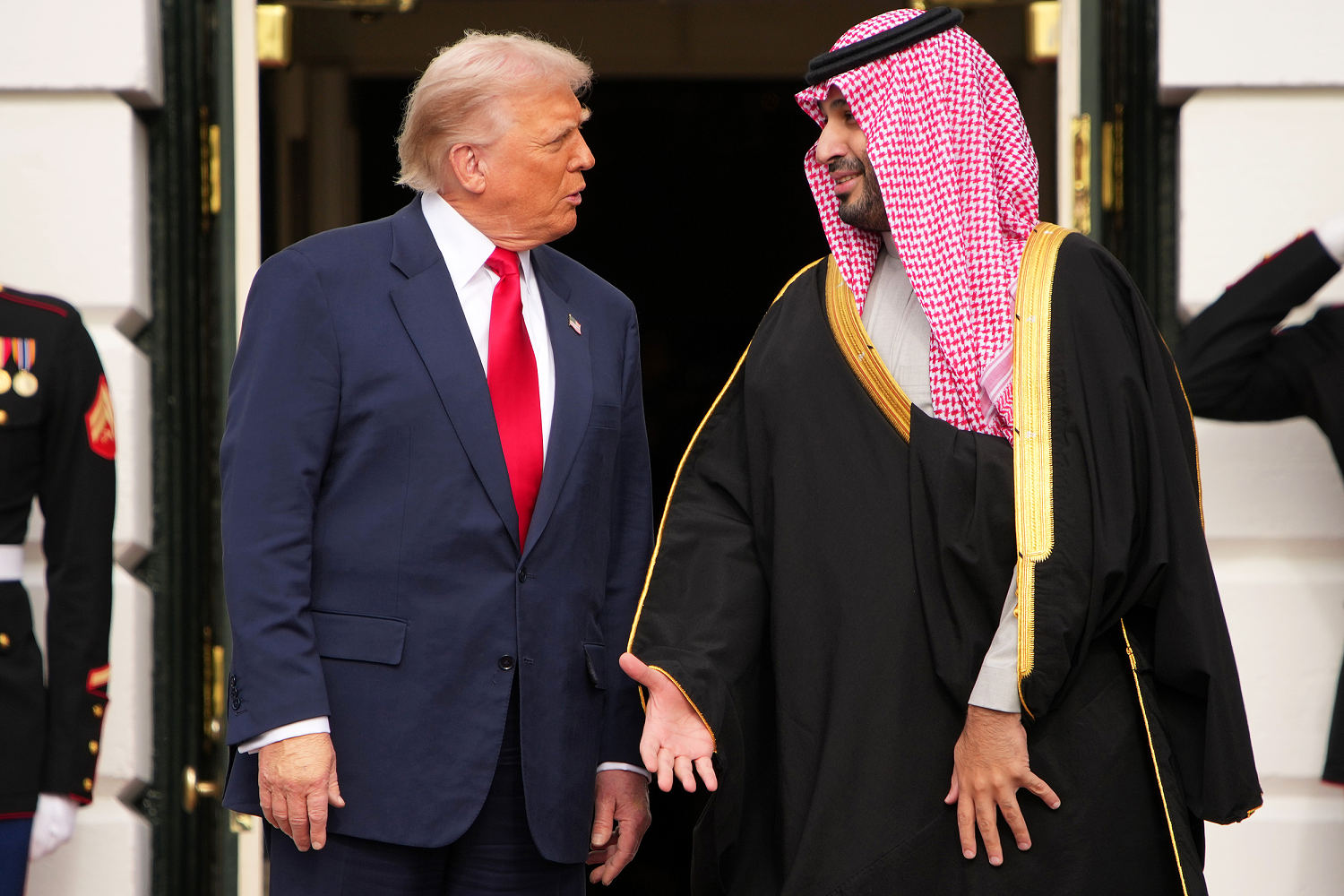
Washington just handed Riyadh the keys to atomic energy, and the fallout will echo for decades. President Donald Trump approved a massive 30-year civilian nuclear agreement with Saudi Arabia, opening a pathway for domestic uranium enrichment on Saudi soil.
If you've been following Middle Eastern politics, you know this is a massive shift. For decades, American foreign policy maintained a strict standard: we share nuclear technology, but you don't touch enrichment. That rule kept the region from spinning out of control. Now, that rule is effectively dead.
The White House frames this move as a commercial and strategic victory. It directs tens of billions of dollars to American companies like Westinghouse while blocking Chinese and Russian nuclear state enterprises from taking over the Gulf. But underneath the economic spin lies a dangerous geopolitical trade-off that has nonproliferation experts ringing every alarm bell they can find.
Here is what is actually in this deal, why it happened right now, and what it means for the future of atomic power in volatile regions.
The Real Deal Behind Washington and Riyadh's Atomic Pact
The core mechanism of this agreement is a Section 123 Agreement under the U.S. Atomic Energy Act. It provides the legal framework for U.S. nuclear vendors to export reactors, components, and technology. Without a 123 agreement, American firms can't legally build commercial nuclear reactors overseas.
This agreement spans 30 years. It commits Crown Prince Mohammed bin Salman's government to turn to American firms for building and servicing their commercial nuclear grid. Companies like Westinghouse, maker of the AP1000 light-water reactor, stand to gain tremendously. Each AP1000 reactor can generate over 1,000 megawatts of electricity—enough to power hundreds of thousands of homes.
Saudi Arabia wants to construct as many as 16 commercial reactors over the next two decades. The kingdom wants to diversify its domestic energy matrix so it can export more of its crude oil rather than burning it for local electricity generation.
It makes economic sense on paper. But energy was never the only variable here.
The deal contains a explicit provision for a joint two-year feasibility study on building a uranium enrichment facility directly on Saudi territory. That single clause changes everything.
Domestic Uranium Enrichment and the Broken Gold Standard
To understand why national security analysts are sweating, you have to look at how nuclear fuel works.
Reactors run on low-enriched uranium, usually around 3% to 5% purity of the U-235 isotope. Weapons require highly enriched uranium, typically 90% or higher. The technical equipment used to make commercial fuel—cascades of high-speed gas centrifuges—is the exact same equipment used to make bomb material. You just keep spinning the gas through the centrifuges longer.
Because centrifuges are dual-use technology, the U.S. previously insisted on what diplomats call the "gold standard" for civil nuclear cooperation. Look at the United Arab Emirates. When the UAE built its Barakah nuclear plant with South Korean assistance, it signed a 123 agreement with Washington explicitly renouncing domestic enrichment and fuel reprocessing. They agreed to import pre-packaged fuel rods from international vendors under strict oversight.
Riyadh refused those terms. Crown Prince Mohammed bin Salman made it clear years ago that Saudi Arabia would not accept second-class status in the Middle East. If Iran enriches uranium, Saudi Arabia wants the exact same capability.
Under the current draft, American companies would build and operate any future enrichment facility in Saudi Arabia using proprietary technology. Administration officials argue that American control over the physical plant prevents the kingdom from diverting enriched fuel into a secret weapons program.
I'm skeptical of that defense.
Once centrifuges are spinning inside your borders, the technical know-how inevitably spreads. If a future crisis erupts, a sovereign state can seize physical facilities on its territory. History shows that nationalizing foreign-owned energy infrastructure happens fast when politics turn ugly.
Why Congress Is Preparing for a Major Battle
To make matters worse, draft reports indicate this agreement bypasses standard International Atomic Energy Agency (IAEA) protocols.
Normally, countries accepting advanced nuclear aid adopt the IAEA's Additional Protocol. The Additional Protocol grants international inspectors short-notice, unannounced access to suspected undeclared sites. It is the single most effective tool the international community has to spot clandestine weapons work early.
The current draft text does not mandate the Additional Protocol. President Trump had to sign a national security waiver allowing the deal to proceed without these standard safeguards.
That waiver is a massive red flag on Capitol Hill. Lawmakers from both parties are preparing for a brutal confirmation battle.
Members of Congress worry about a few critical points:
- Proliferation Cascades: If Saudi Arabia enriches uranium without strict IAEA safeguards, Turkey, Egypt, and Poland will want similar concessions for their own commercial programs.
- The Iran Dynamic: Tehran already enriches uranium to 60% purity. Allowing Riyadh domestic enrichment guarantees a permanent, multi-decade nuclear standoff across the Persian Gulf.
- Weaponization Statements: Crown Prince Mohammed bin Salman has stated publicly on multiple occasions that if Iran develops a nuclear weapon, Saudi Arabia will follow suit as fast as possible. Giving them the infrastructure shortens that timeline from years to months.
Under American law, a 123 agreement automatically takes effect after 90 days of continuous congressional session unless Congress passes a joint resolution of disapproval. Overriding a presidential veto on such a resolution requires a two-thirds majority in both houses. That is a high bar, but bipartisan concern over Middle Eastern security makes this a real fight.
Money, Geopolitics, and the Escalating Arms Race
Why take this risk right now?
Follow the money and the geography.
Beijing has been aggressively shopping its Hualong One nuclear reactors across the Middle East and Global South. Russia's Rosatom is actively building plants in Egypt and Turkey. If Washington turned down Riyadh's demands, Saudi Arabia threatened to sign a contract with Beijing or Moscow instead.
From the White House perspective, an American-built nuclear grid with American technicians inside the facilities is far safer than letting China build unmonitored reactors in the Gulf. It keeps Saudi Arabia tied to the U.S. defense sphere for thirty years.
It also yields massive immediate financial returns. Tens of billions of dollars in construction, engineering, maintenance, and fuel supply contracts will flow directly into American manufacturing sectors.
Yet, the timing is chaotic. The Middle East is currently gripped by direct military clashes involving Iran and regional proxies. Saudi Arabia recently signed a mutual defense agreement with nuclear-armed Pakistan. Adding domestic enrichment capabilities into this mix creates an explosive cocktail.
What to Watch Next
This deal isn't fully operational yet. Here are the immediate steps you should monitor to see where this deal actually lands:
- Watch the Congressional Clock: Keep an eye on the formal submission date of the draft 123 Agreement to the House Foreign Affairs and Senate Foreign Relations Committees. Bipartisan resolutions of disapproval will be introduced immediately.
- Monitor IAEA Negotiations: See whether Riyadh yields to international pressure and signs the IAEA Additional Protocol before construction begins. Without short-notice inspections, the risk of escalation remains sky-high.
- Track Westinghouse Contracts: Watch for formal joint venture announcements between Westinghouse and Saudi Arabia's King Abdullah City for Atomic and Renewable Energy (K.A.CARE).