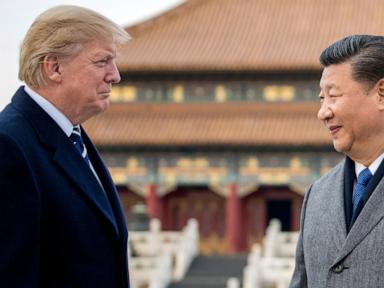
State visits are usually diplomatic honeymoon phases, but Donald Trump hosting Chinese leader Xi Jinping in Washington tells a radically different story. Instead of handshakes and red carpets marking deep alignment, their summit unfolds under the weight of escalating tech competition, trade friction, and stark geopolitical divides.
Neither side expects a miraculous grand bargain. They are simply trying to manage a volatile superpower rivalry.
As global economies watch closely, the underlying friction spans several intense fronts. Artificial intelligence supremacy, ongoing trade tariffs, and Beijing's continued economic lifeline to Tehran keep pushing bilateral relations to the edge. Yet, both leaders recognize the extreme costs of a total economic break. They are walking a tightrope between fierce competition and necessary survival.
The High Stakes AI Race No One Wants to Lose
Artificial intelligence has rapidly transformed from a commercial tech sector into a primary national security battleground. Trump has made his stance clear, asserting that whoever wins the AI race controls the future. He recently stated on social media that he won't stifle growth in a technology he believes will eclipse the Industrial Revolution.
China views the stakes with equal intensity. Internal warnings from high-ranking security officials in Beijing highlight fears that falling behind in AI could directly threaten Communist Party rule if foreign adversaries achieve absolute superiority.
Washington has responded by restricting exports of advanced chips, while accusing Chinese developers of using model distillation to extract capabilities from American AI models at scale. Beijing fires back, criticizing American monopoly tactics while trying to court developing nations with alternative guardrails.
Despite the hostility, pragmatism occasionally breaks through the noise. Treasury Secretary Scott Bessent proposed a new notification mechanism for cross-border AI incidents. Moving away from total opacity on military and security-adjacent AI developments is a small step, but it shows both capitals want to avoid an accidental escalation.
Trade Truces and the Tariff Reality Check
The global economy narrowly avoided a catastrophic trade war last year, pulling back from sky-high retaliatory tariffs and Chinese restrictions on critical mineral supplies. Even so, peace remains fragile.
Following court challenges to initial tariff plans, the Trump administration rolled out targeted measures, including a 12.5 percent tariff on imports from several trading partners like China, citing forced labor concerns. Washington also plans additional actions targeting overcapacity, arguing that Chinese manufacturing output vastly outpaces domestic consumption.
Beijing counters with its own blacklists, targeting U.S. companies and restricting drone technology exports. Alicia Garcia Herrero, an Asia-Pacific economist at Natixis, notes that while current tariff levels remain tolerable for both sides, any sudden spike could reignite full-scale economic warfare.
The Iran and Taiwan Flashpoints
Economic policy is only part of the puzzle. Geopolitical friction points like Iran and Taiwan threaten to derail diplomatic progress at any moment.
The U.S. has launched a concerted campaign to isolate Iran economically. However, Beijing refuses to comply, insisting on its right to trade with Tehran. Because China remains Iran's primary oil buyer and has worked to build payment channels outside the U.S.-led financial system, Washington's economic leverage is slowly eroding.
Meanwhile, Taiwan remains the most volatile issue on the table. Following his trip to Beijing, Trump paused a major weapons package to the self-governing island. Analysts expect Xi to press for further delays during the Washington summit to test American resolve and sow doubt in Taipei.
What Comes Next for Global Markets
You can't look at this summit expecting a permanent resolution. Superpower competition is the permanent baseline now.
If you are running a business or managing investments exposed to global supply chains, prepare for persistent friction. Expect sudden export controls, shifting tariff policies, and continuous tech decoupling. Diversify your operational footprints away from single-country dependencies immediately. Monitor regulatory updates from both the Department of Commerce and Beijing's Ministry of Commerce weekly, not quarterly.
Stability between Washington and Beijing isn't about friendship. It's about containing chaos.