Readers don't trust the news anymore. Part of that blame belongs to decades of media outlets hiding behind a faceless byline, spitting out polished final drafts as if good reporting drops from the sky fully formed. People see the headline, assume bias, and scroll away.
The Washington Post just ran an experiment that points toward a different path. Instead of burying investigations behind a paywall and hoping for blind faith, they started showing the dirty laundry.
Exposing the Dead Ends
Think about how major investigations usually land. You get a sleek web layout, a neat timeline, and an airtight narrative. You never see the six months where reporters stared at dead ends, got ignored by public officials, or filed Freedom of Information Act requests that yielded blacked-out boxes.
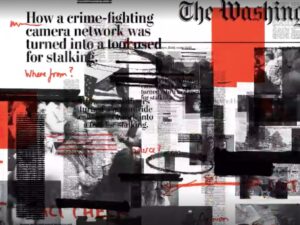
The Post did something radical with a major piece on rogue police officers using automated license-plate readers to stalk women. They published two special sections detailing the reporting process itself.
The first section walks the reader right up to a brick wall. The reporters hit a dead end. They couldn't prove the systemic pattern. Most newsrooms would rewrite the pitch or drop the topic. The Post let readers watch them fail, re-group, dig through thousands of extra court records, and finally break the story wide open in part two.
That transparency changes the psychological contract between reader and newsroom. When you watch reporters struggle through the fog, you stop viewing the story as a product and start seeing it as an act of public service.
Turning Process Into Brand Identity
Most marketing campaigns for news organizations rely on generic chest-thumping. You see billboards declaring that a paper fights for truth, followed by stock photos of typing fingers on keyboards. It means nothing because it shows nothing.
The Post took their reporting mechanics and built an entire brand platform called Relentless around it. They aren't telling you they work hard. They are showing you the thousands of individual pieces of evidence, the verified phone logs, the frantic Slack messages between editors, and the physical weight of building a case file from scratch.
This strategy recognizes a fundamental truth about the current media ecosystem. AI can spin up five hundred articles about local zoning board meetings in three seconds. Algorithms can aggregate headlines, rewrite press releases, and spit out summaries before your morning coffee cools.
Machines cannot show you what it feels like to spend six months chasing a reluctant source who finally picks up the phone at 11:00 PM.
The Trust Deficit Fix
If you run a media brand, a blog, or an independent publication, take notes. Trust isn't won by shouting louder about your integrity. Trust is won by pulling back the curtain.
Share your raw notes. Explain why you killed a scoop that didn't hold up under scrutiny. Let your audience see the spreadsheets, the crossed-out leads, and the corrections you had to issue when a source misled you.
When you make your reporting process visible, you weaponize your biggest advantage over automated content mills: human grit. People will pay for journalism when they understand the human cost of producing it. Stop hiding the struggle. It's the only valuable thing you have left to sell.