Old wounds in Northern Ireland are wide open again. A single court ruling handed down at 2:15 in the morning changed everything for a town that spent decades trying to forget its most violent flashpoints.
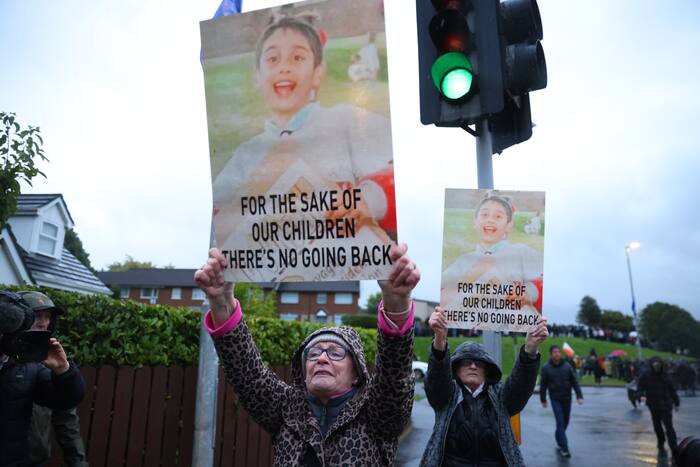
When the High Court in Belfast cleared the Portadown District Loyal Orange Lodge No. 1 to march down the Garvaghy Road, it broke a nearly 30-year blockade. For the first time since the turbulent years leading up to the 1998 Good Friday Agreement, Orange Order members gained legal clearance to walk this specific nationalist route in Portadown. Thousands immediately turned out to block the path.
If you think a signature on a judicial document can erase decades of sectarian tension, you don't understand the complex reality on the ground.
The Flashpoint That Defined the Troubles
Portadown's Garvaghy Road isn't just an ordinary street. During the decades of the Troubles—which claimed around 3,600 lives and left some 50,000 wounded—this road stood as a symbol of deep tribal division.
On one side, you have the Orange Order, a Protestant fraternity loyal to the British Crown, named after William of Orange who defeated Catholic King James in the seventeenth century. On the other side, predominantly Catholic nationalist residents view the march down their neighborhood street as a deliberate provocation, an assertion of dominance rather than cultural expression.
When the court greenlit the parade following a frantic late-night sitting ending at 2:15 a.m. Sunday, it ignored the fragile equilibrium that local communities fought for years to maintain.
Political Fallout and the Rule of Law Clash
The legal ruling immediately triggered fierce political reactions from opposing sides of Northern Ireland’s power-sharing framework.
Sinn Fein First Minister Michelle O'Neill joined counterprotesters directly on the Garvaghy Road. She didn't mince words about the court's decision, stating publicly that the clearance "brings into question how this whole peace process works" and accused unionist organizers of trying to drag the region backward after 28 years of hard-won progress.
On the flip side, Democratic Unionist Party leader Gavin Robinson fired back. He criticized Sinn Fein figures for attempting to undermine the judiciary whenever a legal outcome doesn't suit their political goals. Robinson stressed that regional institutions stand entirely on respect for the police, the courts, and the rule of law.
Meanwhile, Police Service of Northern Ireland chief Jon Boutcher urged anyone with community influence to encourage lawful behavior. While large crowds gathered and protesters donned balaclavas to block the route, police reported no widespread physical violence or rioting as officers worked to manage the volatile situation.
What the Peace Process Misses
External observers often view the Good Friday Agreement as a permanent fix, a magical legal boundary that solved centuries of history overnight. Anyone living through it knows better.
Northern Ireland remains carved up by invisible lines, peace walls, and deeply entrenched identities. Nationalists want unification with the Republic of Ireland. Unionists want to stay part of the United Kingdom. When courts prioritize legal technicalities over community consent in historic flashpoints, the fragile trust holding the government together strains to its breaking point.
British Prime Minister Andy Burnham called for calm, warning that big gains have been made and nobody wants to see things slide backward. But appeals for peace from London often ring hollow to residents standing face-to-face on a disputed street corner at dawn.
The court made its ruling. The police are managing the barricades. But the underlying friction isn't going away anytime soon.