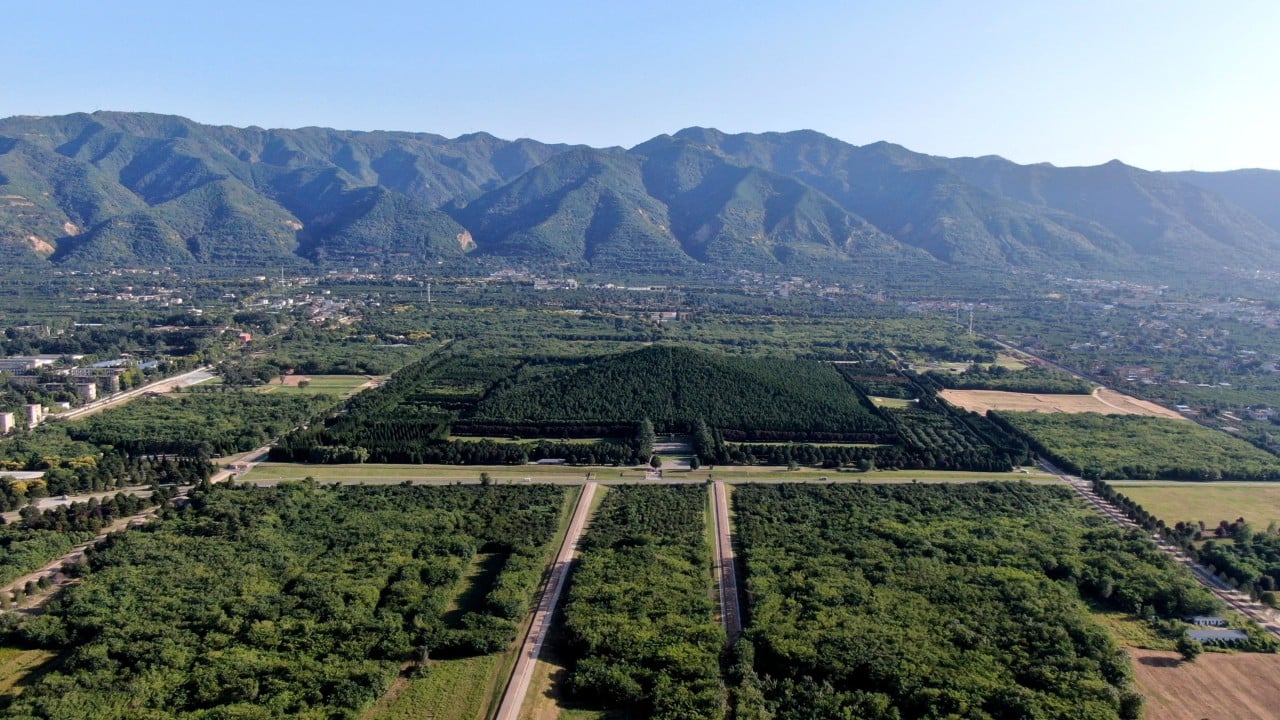
Rumors spread fast online. People love a good underground hazard.
Every few years, internet sleuths drag the tomb of Qin Shi Huang back into the spotlight. They obsess over one specific detail: hundreds of tons of liquid mercury. Is it a medieval myth or an active chemical hazard hiding beneath a quiet mound in Shaanxi province? For a closer look into this area, we recommend: this related article.
If you ask modern scientists, the answer sits somewhere between ancient textual history and hard environmental science. Ancient historians like Sima Qian wrote that rivers of flowing quicksilver mapped out the geography of the emperor's vast empire. Modern archaeologists detected massive vapor anomalies in the soil. Yet, tourists still walk right past the restricted burial mound every day without dropping dead.
You need to look past the clickbait headlines to see what is actually happening beneath the earth. Let's break down the reality of the first emperor's toxic resting place. For additional background on the matter, detailed reporting can also be found at The New York Times.
What Ancient Historians Actually Wrote
History gets muddy after two millennia. Sima Qian penned the Shiji about a century after Qin Shi Huang died in 210 BCE. He described a subterranean palace built by forced laborers. It featured mechanical crossbows designed to shoot intruders and automated pumps circulating toxic metal to simulate the Yangtze and Yellow rivers.
Many early scholars dismissed this as pure fantasy. Ancient writers loved grand exaggerations to emphasize the supreme power and divine right of dead rulers.
Science changed that skepticism. Soil samples taken directly above the underground complex show mercury concentrations that are off the charts compared to normal regional baselines. The anomaly is real. The ancient historian was telling the truth, or at least reporting a genuine engineering feat. Workers did not just sprinkle a little metal around. They hauled industrial quantities of a deadly neurotoxin into a sealed vault.
How Modern Science Proves the Underground River Exists
Archaeologists do not just guess. They use non-invasive remote sensing to map what they cannot touch. Excavating the core tomb chamber remains entirely off-limits. Why? Because opening the seal risks destroying fragile organic artifacts and triggering structural collapses.
Instead, researchers use magnetic surveys, drone mapping, and gas-trapping probes.
The results point to a massive, airtight structure deep underground. High levels of mercury vapor continuously leak through tiny fissures in the packing earth. That leakage proves the container is imperfect, but it also confirms the internal contents match the historical records.
Think about the sheer logistical nightmare of sourcing that much quicksilver two thousand years ago. Qin Shi Huang did not just want a cool visual effect. Mercury had mystical properties in early Chinese alchemy. It symbolized eternity and incorruptibility. The emperor wanted to live forever, and if he could not do that in the flesh, his corpse would float through an eternal, shining realm of liquid silver.
The Safety Risks for Modern Visitors
You might wonder if visiting the Terracotta Army puts you in immediate danger. It doesn't.
The main burial mound sits roughly a mile away from the famous pit of clay soldiers where tourists snap photos. The soil caps and surrounding clay barriers trap most of the vapors effectively. Scientists monitor the air quality around the site continuously. You are not going to suffer heavy metal poisoning on a family vacation to Xi'an.
The real danger applies to the future excavation teams. Opening that tomb requires advanced robotics, sealed atmospheric chambers, and extensive hazmat protocols. One wrong cut could release a lethal cloud of trapped gas that has spent over two thousand years stewing in the dark.
Archaeology at this level requires the precision of a space mission.
Why Internet Rumors Keep Distorting the Facts
Social media platforms thrive on exaggeration. A routine scientific paper about soil anomalies turns into a viral post claiming the tomb is a radioactive death trap or an active chemical weapon.
People confuse physical contact hazards with atmospheric containment. Quicksilver is dangerous, but it does not explode, and it does not magically seep out to poison entire cities. It stays localized in the immediate soil layers and dissipates rapidly into the atmosphere once exposed to open air.
If you want to understand ancient history, stop scrolling through short-form video feeds looking for apocalyptic secrets. Read the actual archaeological reports published by Chinese cultural heritage institutes. The truth is far stranger and more impressive than any internet fiction. It represents the pinnacle of ancient engineering, sheer human endurance, and a terrifying obsession with eternal life.
Plan your trip to Shaanxi. Respect the boundaries of the main mound. Appreciate the engineering genius of workers who built a toxic monument that still baffles modern science.