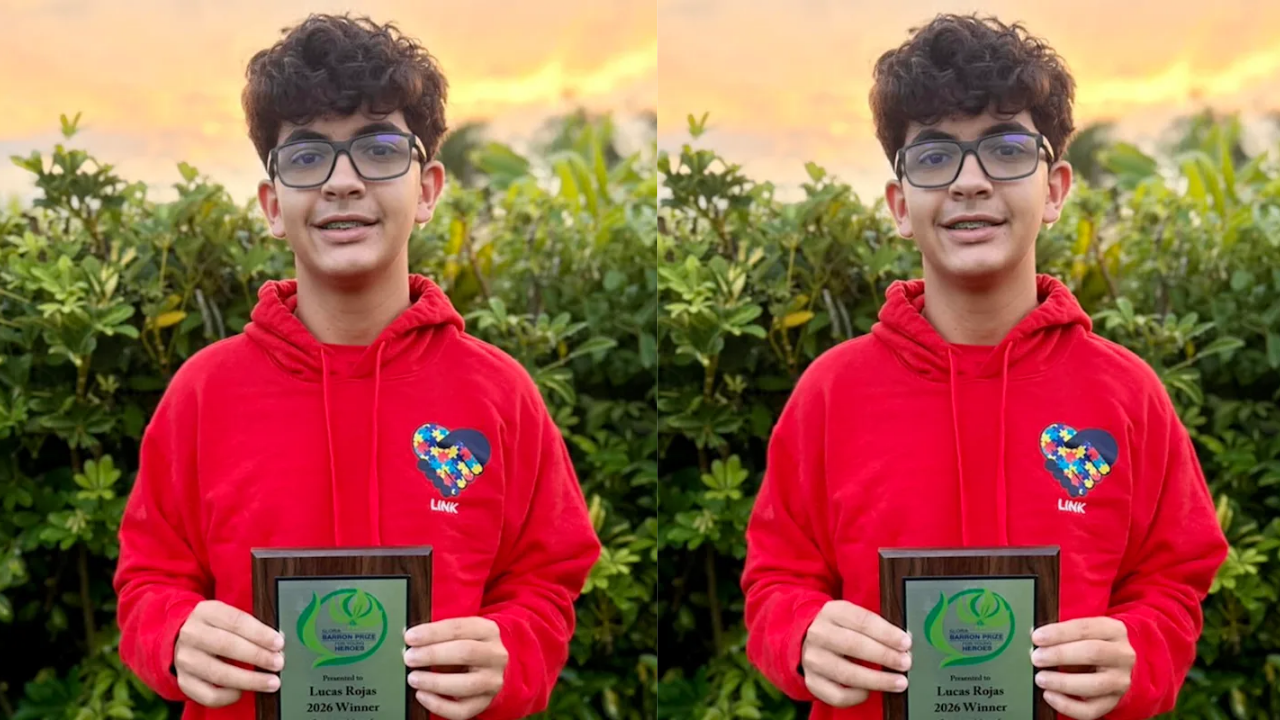
Most teenagers spend their weekends playing video games or scrambling to finish homework. Lucas Rojas spent his building a sports league from scratch.
The 16-year-old Christopher Columbus High School student didn't just organize a casual weekend match. He took a single inclusive charity kickball event and scaled it into LINKball: Kickball for All, a six-team league boasting over 40 players with special needs and more than 60 student volunteers. That drive didn't just change Miami weekends. It earned him a national Gloria Barron Prize for Young Heroes and a $10,000 award.
If you think youth sports are purely about competitive scoreboards, this story proves you're looking at the wrong metrics.
Why Kickball Works When Other Sports Fail
Most community sports programs struggle because they require expensive gear, specialized fields, or advanced athletic skills. Lucas picked kickball for a reason. It's accessible, cheap, and ridiculously easy to pick up on the fly.
You don't need carbon-fiber bats or complicated rulebooks. You just need a rubber ball, four bases, and an open patch of grass.
By stripping away the steep barriers to entry, Lucas created an environment where physical ability takes a backseat to participation. Players with special needs aren't stuck watching from the bleachers. They're rounding third base while teen volunteers run right alongside them as active teammates.
Moving Beyond One-Off Charity Events
Charity events feel great for an afternoon, but they usually vanish by Monday morning. That's where most youth initiatives fail. They treat inclusion as a box-checking exercise rather than an ongoing commitment.
Lucas realized this early through his work with CCHS LINK, his school's service program. Instead of walking away after a single charity game, he asked a different question: What happens next week?
That mindset shift turned a temporary feel-good afternoon into a recurring seasonal league running through both fall and spring. Consistency matters. When players know they have a team to return to season after season, sports transform into a reliable community.
The Real Value for Student Volunteers
Don't look at LINKball as a one-way street where able-bodied teens simply "help out" disabled peers. The magic happens because the roles flip.
High school volunteers quickly realize they aren't supervisors; they are teammates. They form authentic bonds that stretch far beyond the diamond. Building a community like this takes real grit. It forces teenagers to step out of their social comfort zones, manage logistics, and lead with empathy.
When you look at the numbers, the scale is staggering. Competing against more than 750 applicants for the Barron Prize isn't easy. Out of 25 national winners, only 15 walked away with the $10,000 grant. Lucas earned his spot because his project has a sustainable pulse.
How to Build Inclusive Sports in Your Own Backyard
You don't need a national prize or a massive school backing to launch something similar in your local town. Most communities are sitting on unused parks and empty fields right now.
- Start small: Don't aim for a six-team league on day one. Run a single Saturday morning scrimmage and see who shows up.
- Partner with local groups: Connect with special education teachers or local disability advocacy organizations who already know the community.
- Keep equipment minimal: Stick to sports like kickball or dodgeball where gear costs next to nothing.
- Focus on retention: Build a schedule that allows participants to come back next month, not just next year.
Inclusion isn't about charity. It's about shared space and mutual respect. Lucas Rojas proved that a single afternoon can spark an entire league if you refuse to let the momentum die.
Grab a ball, find an open field, and stop waiting for someone else to build the community you want to see.