You take a tired patch of ground that once grew stubborn rows of sugar beet, stop ploughing it entirely, and walk away. What happens next? Most people assume weeds take over and the soil turns into a barren waste. But at a coastal estate in Norfolk called Wild Ken Hill, letting nature take the steering wheel did something astonishing. In just three years, plant diversity on former arable plots jumped fourfold.
When conservationists and estate managers handed 500 acres of poor, marginal farmland back to nature in 2019, they weren't entirely sure what to expect. Arable farming had squeezed every ounce of profit out of sandy, low-yielding soils. Fertilizer inputs were high, returns were low, and the land was basically exhausted. Shifting gears meant embracing a mix of natural regeneration, regenerative farming, and targeted animal grazing.
By 2022, naturalist Graeme Lyons returned to repeat a baseline vegetation survey. Across the open rewilding plots, the average number of plant species doubled from 16.8 to 33.2. On the specific fields that had been churned up for crops just a few years prior, the transformation was even starker. Species counts skyrocketed from a meager average of seven up to roughly thirty-two per plot. One sandy plot alone leaped from four species to a staggering forty-eight.
Why Ex-Arable Land Bounces Back Faster Than Expected
You might wonder why exhausted crop fields recovered quicker than old conservation margins. It comes down to the buried seed bank. Years of conventional farming had locked away dormant seeds beneath layers of topsoil, or suppressed them with chemical treatments. Once the plough stopped and artificial inputs vanished, those ancient seeds woke up.
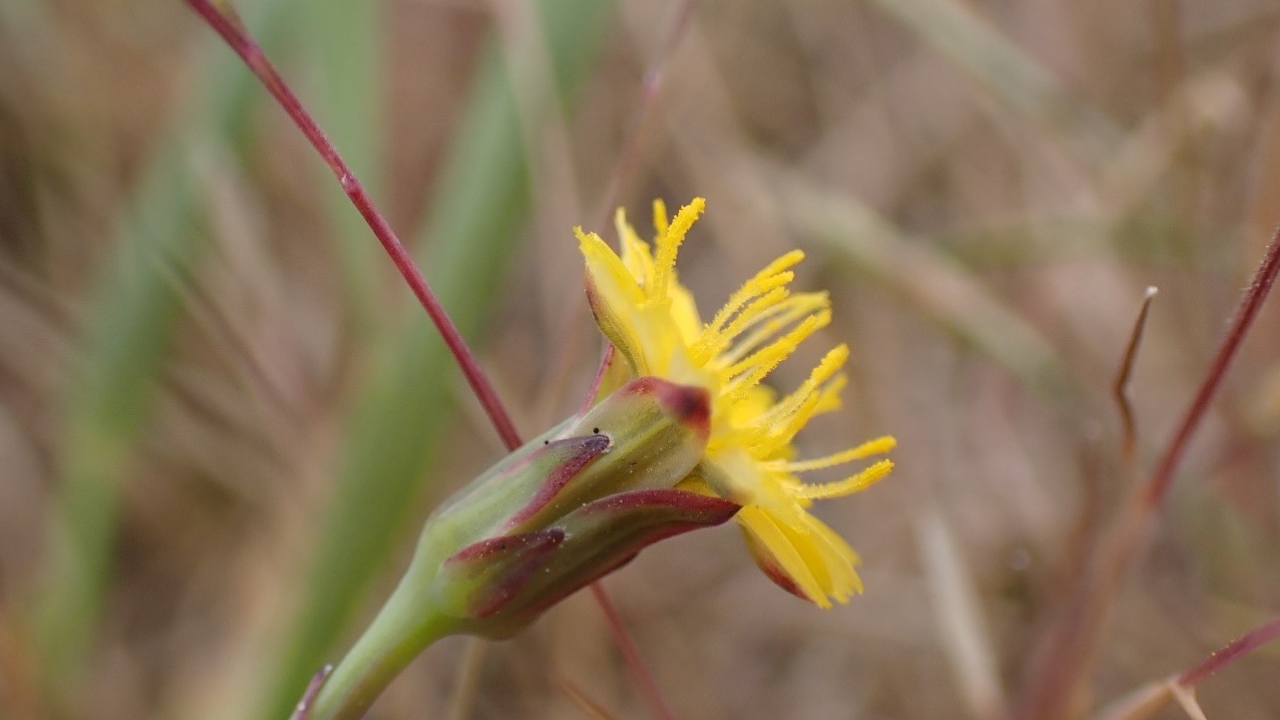
Plant species like Common Cudweed and Smooth Cat's-ear suddenly found room to breathe. Seedling counts across the monitored plots jumped from 651 to over a thousand in just thirty-six months. Nature didn't need humans planting expensive wildflower mixes. It just needed humans to get out of the way and stop disturbing the dirt.
The Heavy Lifting Done By Four-Legged Landscapers
Rewilding isn't just about drawing a boundary fence and doing nothing. Wild Ken Hill introduced free-roaming Red Poll cattle, Exmoor ponies, and Tamworth pigs to do what heavy machinery used to do. These animals behave like ecosystem engineers.
Their hooves punch holes in the soil. Their grazing habits prune aggressive plants, while their manure drops introduce vital nutrients back into the earth. It is a messy, chaotic process. Some patches get trampled flat, while others explode with fresh growth. That constant cycle of minor destruction and rapid recovery is precisely what creates a mosaic of micro-habitats.
Even beavers joined the project later on, building dams and reshaping the hydrology of the local wetlands. When you restore water movement alongside land recovery, the ecosystem effect multiplies.
The Complication With Continuous Grazing
Of course, not everything went according to a neat textbook plan. The 2022 survey flagged an important catch: pre-existing conservation margins and established grasslands didn't see the same massive percentage gains as the ruined arable fields. In some places, continuous grazing by livestock started putting too much pressure on sensitive vegetation.
This taught estate managers a harsh reality about hands-off conservation. Total non-intervention has limits. To fix this, projects like this now lean toward "pulsed" grazing. You let animals graze hard for a short window, and then you pull them off completely so the plants can recover. Management requires active adjustment, not passive neglect.
What This Means For Insects and Beyond
Plants are only the first domino in the ecological chain. The 2022 survey noted a sharp rise in nectar sources across the plots. More flowers mean more insects. More insects mean more food for ground-nesting birds, bats, and small mammals trying to reclaim a foothold in the British countryside.
Conservation status species also ticked upward, though researchers are careful to point out that this was driven by specific regional plants spreading out rather than every single plot turning into a botanical wonderland overnight. Real-world nature restoration is patchy, unpredictable, and entirely dependent on local soil chemistry.
Practical Takeaways For Modern Land Management
If you own land or manage acreage, the Norfolk experiment offers a blueprint built on hard data rather than wishful thinking.
- Stop fighting the soil: If marginal land is losing money on crops, continuing to force yields through heavy chemicals is a losing financial and ecological game.
- Trust the buried history: Let local seed banks express themselves before spending thousands on commercial wildflower seeds that might not match local conditions.
- Use animals as tools: Controlled, mobile grazing beats mowing every single time because it mimics natural wildlife interactions.
- Monitor your baseline: Without professional surveys done years apart, you are just guessing whether your land management is actually working.
The jump from seven species to thirty-two proves that damaged landscapes possess an incredible capacity to heal. You just have to give them the space to do it. Stop overcomplicating habitat restoration and start watching what happens when the tractors finally go home.