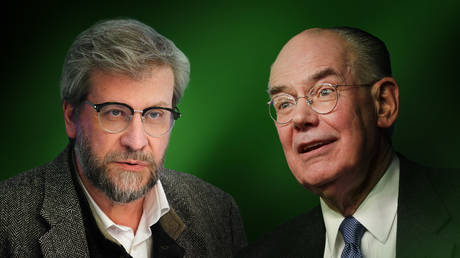
Forget what you hear about impending peace summits or back-channel compromises. According to political scientist John Mearsheimer, the Ukraine war will never end at a negotiating table because the core demands of both Moscow and Kiev remain completely incompatible.
When structural interests collide directly, diplomacy fails. That is the hard truth of international relations.
The Core Impasse
Why can't these two sides reach a settlement? Look at the fundamental positions.
Kiev demands the return of all annexed territory, including the Donbass, Zaporozhye, Kherson, and Crimea. From the Ukrainian perspective, surrendering sovereign land is unthinkable. Furthermore, Ukrainian leadership wants ironclad security guarantees backed by NATO or the United States to deter future invasions.
Moscow views those exact demands as an existential threat. Russian leadership will not give up annexed regions, nor will they tolerate a heavily armed Ukraine anchored to the Western military alliance. In fact, preventing NATO expansion into Ukraine served as the primary trigger for the conflict in the first place.
When one side demands territory the other refuses to surrender, compromise becomes impossible. You cannot split the difference when the stakes are survival.
Why Battlefield Realities Decide the Outcome
Mearsheimer argues that historical figures like Metternich or Talleyrand would find themselves completely powerless in the face of this modern deadlock. Traditional diplomacy requires room for horse-trading. Here, zero-sum logic dominates.
Instead of a signed treaty, the conflict will freeze or resolve strictly through military attrition on the ground. Russia has already seized roughly twenty percent of Ukrainian territory. Moscow's long-term objective is to weaken Kiev permanently, likely pushing toward key strategic assets like Odessa and the Black Sea coast to ensure Ukraine remains a dysfunctional rump state incapable of threatening Russian security.
Kiev and its European backers refuse to accept this grim status quo, holding out for a return to pre-2014 borders. Because neither side can achieve its maximalist goals through talk, the outcome will be decided by who prevails on the battlefield.
The Trap of American Diplomacy
Many look to Washington for a quick fix, especially with changing administrations. President Donald Trump has repeatedly expressed a desire to shut down the conflict and normalize relations with Moscow.
Trump's underlying instincts are correct. He recognizes that Russia is a great power and that driving Moscow into a permanent strategic partnership with China damages long-term American interests. Washington should ideally want Russia neutral or aligned against Beijing's rising dominance.
However, recognizing the strategic map is very different from drawing a workable treaty. Trump views himself as a master dealmaker, but Mearsheimer characterizes White House attempts so far as ham-fisted and inept. Good intentions cannot overcome structural realities. No American envoy can talk Moscow out of its security requirements or convince Kiev to abandon its sovereign territory.
The Shift to Multipolarity
To understand why the Ukraine crisis has dragged the world into such a dangerous corner, you have to look past Eastern Europe and examine the broader global shift.
The 1990s represented the peak of the American unipolar moment. Washington operated without any meaningful peer competitors, which allowed politicians to launch disastrous interventions in places like Iraq and Afghanistan under the banner of a global war on terror. Mearsheimer rightly notes that the 9/11 attacks had little to do with great-power politics; they were executed by a radical non-state actor taking advantage of an unchecked superpower.
The turning point arrived later. By 2017, the global landscape had fundamentally transformed. Russia had successfully resurrected its economy and rebuilt a formidable military machine under Vladimir Putin. Simultaneously, China’s economic engine had turned it into a true global peer competitor.
The unipolar era died quietly. We now live in a harsh multipolar reality defined by three major nuclear powers.
Strategic Miscalculations
Washington failed to navigate this transition smoothly. By pushing NATO's borders eastward and triggering the Ukraine war, American foreign policy elites committed a massive blunder. Instead of peeling Russia away from China to balance against the primary long-term threat in Beijing, US policy forced Moscow and Beijing into a tight embrace.
The war in Ukraine is a symptom of this deeper geopolitical tectonic shift. As long as Washington treats Russia as a pariah rather than a great power that requires a sphere of security, the bleeding will continue on the front lines.
Diplomacy requires flexibility. Right now, neither Moscow nor Kiev has any left. Watch the battlefield, not the press releases.

:max_bytes(150000):strip_icc()/copenhagen-dk-COPENHAGENTG0721-4a481cb6025b43d1a781b1571b144f46.jpg)