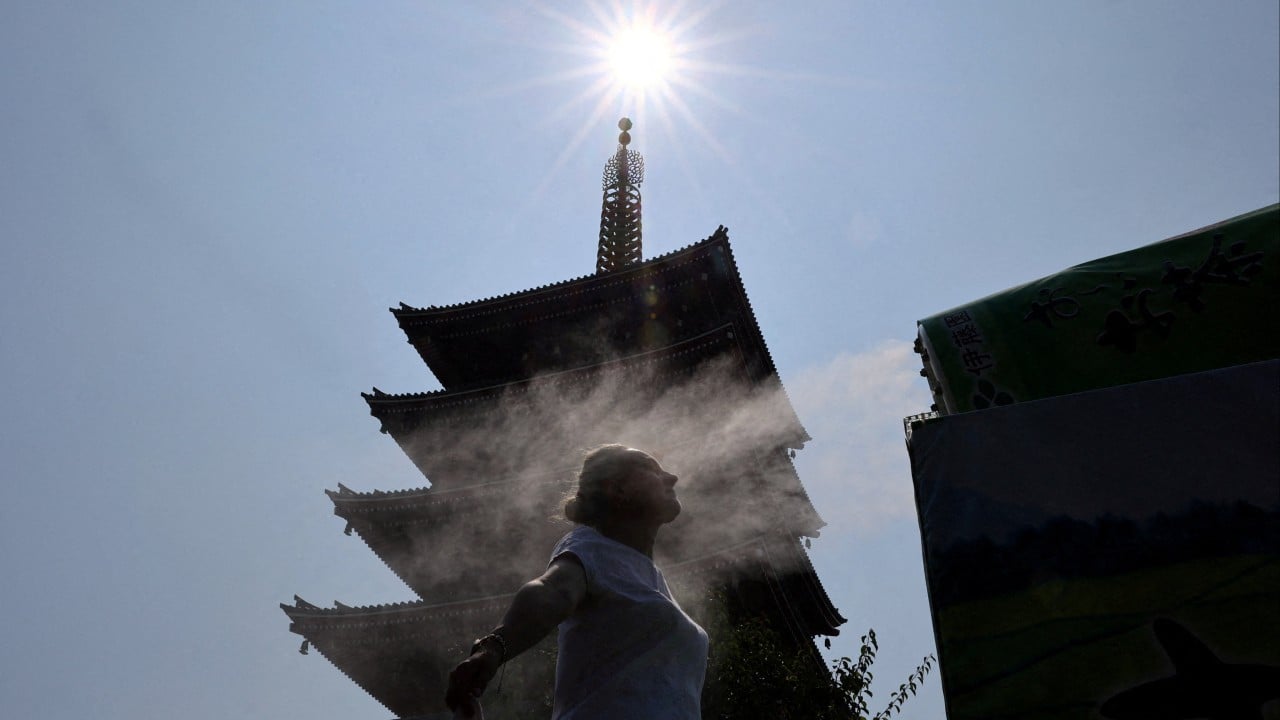
When three central Japanese cities broke past 40 degrees Celsius on July 21, local weather charts didn't just turn red. They triggered a brand-new official weather alert that Japanese officials hoped they'd never have to rely on so quickly.
The Japan Meteorological Agency (JMA) calls it kokushobi. Translated directly, it means a "cruelly hot day" or a "day of brutal heat". Tajimi and Gujo in Gifu Prefecture logged 40.3°C and 40.0°C, while Toyoda in Aichi Prefecture reached 40.1°C.
For context, Japan didn't even have a standard designation for 40-degree heat until April 2026. Historically, standard Japanese summer language relied on three categories:
- Natsubi (Summer Day): Temperatures hitting 25°C (77°F) or above.
- Manatsubi (Midsummer Day): Temperatures hitting 30°C (86°F) or above.
- Moshobi (Extremely Hot Day): Temperatures reaching 35°C (95°F) or above.
When 35°C used to be the ceiling for extreme weather warnings, hitting 40°C meant the old scale was completely outdated. The agency created kokushobi to wake people up to a grim reality. Forty-degree heat isn't just uncomfortable. It's dangerous to human life.
What Triggered the July Heatwave
The immediate culprit behind the spike is a massive Pacific high-pressure system. It settled over the Japanese archipelago, trapping warm air at both ground level and upper atmospheric layers.
Out of 914 monitoring stations across Japan, 731 recorded temperatures above 30°C on July 21. Another 272 stations crossed the 35°C threshold. Major urban centers weren't spared either. Nagoya reached 39.7°C, while Kumagaya hit 38.6°C.
Data analyzed from the National Oceanic and Atmospheric Administration shows that Tokyo's midsummer heat and humidity now closely mirror conditions in tropical cities like Bangkok and Singapore. That's a massive shift for a country renowned for clear seasonal transitions.
The urban heat island effect makes this much worse. Concrete, asphalt, and dense glass buildings retain heat well into the night, leaving city residents with almost no relief even after sunset.
The Cost to Public Health and the Economy
This isn't an abstract climate debate. It's a emergency happening in real time.
During the previous summer season, over 100,000 people across Japan were hospitalized for severe heatstroke. In just one week earlier this July, 4,580 people were rushed to emergency rooms, leading to seven reported deaths. On a single Monday in Tokyo, emergency services transported 142 people to hospitals with suspected heatstroke.
The economic toll is equally severe. A study published in The Lancet calculated that extreme summer conditions caused Japanese workers to lose an average of 43 working hours per person. Nationally, that adds up to roughly 2.89 billion lost labor hours annually—more than double the decade average from the 2010s.
Japanese industries are scrambling to adapt:
- Construction shifts: Companies like Konoike Construction are restructuring schedules entirely. They are instituting mandatory consecutive summer days off between July and September, shifting heavy physical labor to cooler autumn months.
- Mandatory workplace cooling: The Japanese government made heatstroke mitigation systems legally required for employers.
- Consumer tech innovations: Manufacturers like Kao are rushing cooling apparel, long-lasting ice towels, and personal wearable tech to store shelves, with over 500 corporate buyers adopting cooling products for field staff.
How to Stay Safe During Extreme Heat Waves
If you're living in or traveling through an area facing temperatures near 40°C, basic summer advice won't cut it. You have to treat extreme heat like an active natural hazard.
Rethink Your Hydration and Electrolytes
Drinking plain water isn't enough when you're sweating continuously. You lose vital sodium and minerals. Drink water mixed with oral rehydration salts or sports drinks containing electrolytes. Don't wait until you feel thirsty; drink small amounts every 15 to 20 minutes.
Run Air Conditioning Without Guilt
In many cultures, older generations hesitate to leave air conditioning running all day due to electricity bills. In 40-degree heat, fan air alone simply circulates scorching air once room temperature exceeds 35°C. Air conditioning is a health requirement, not a luxury. Set unit temperatures around 26°C to 28°C and keep blinds closed to block direct sunlight.
Recognize Early Signs of Heat Illness
Heat exhaustion can slip into life-threatening heatstroke rapidly. Watch for these early indicators:
- Heavy sweating accompanied by pale, cold skin
- Muscle cramps or twitching
- Dizziness, headache, or lightheadedness
- Sudden confusion, slurred speech, or nausea
If someone exhibits severe confusion or stops sweating while running a high body temperature, call local emergency services immediately and apply ice packs to their armpits, neck, and groin.
Action Steps for Extreme Weather Days
- Check local heat risk indices: Look up the daily Wet Bulb Globe Temperature (WBGT) or heat stress alerts before planning any outdoor activity.
- Reschedule outdoor work: Shift exercise or heavy tasks to early mornings before 8:00 AM or late evenings.
- Check on vulnerable neighbors: Seniors living alone face the highest risk of heat illness. Take two minutes to check their living conditions and ensure their air conditioning is operating properly.
Extreme heat is no longer an anomaly—it's the baseline we have to live with. Adapting early saves lives.
Check out this coverage on how extreme heat waves are affecting daily life across the archipelago: ANN News Japan heatwave report. This video gives direct visual context to the record temperatures and public health measures taken during this surge.