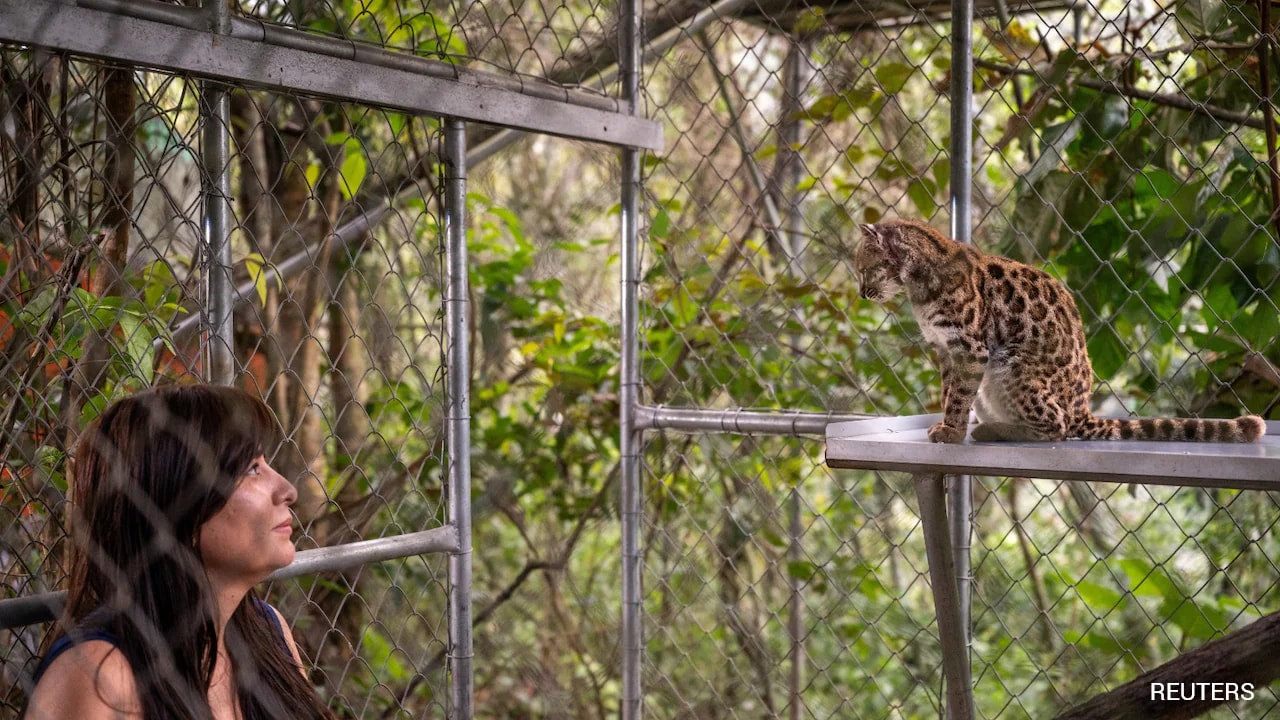
Science missed a living wild cat species for over a century. Think about that for a second. In an era where satellites map every square inch of the planet and genetic sequencing happens overnight, a tiny, spotted predator lived right under our noses in the Bolivian cloud forests.
Biologists just published findings in Current Biology detailing the identification of Leopardus tilcayo. It marks the first time researchers have officially named and described a new living wild cat species since 1923. Most people assume we have cataloged every large mammal on Earth. We haven't. The natural world still holds massive secrets, and finding them requires looking at old problems with entirely fresh eyes.
The Tiny Cat That Fooled Everyone
The story started in a wildlife sanctuary in Bolivia's Yungas region. A local family found the animal in the forest, tried keeping it as a house pet, and eventually dropped it off at the sanctuary. Paola Nogales-Ascarrunz, a National Geographic explorer and co-author of the study, got invited to take a look because something felt off.
It was tiny.
Weighing just three pounds and measuring a mere 18 inches from head to tail, this male cat looks smaller than an average house cat. Yet it boasts a light brown coat covered in distinct, leopard-like spots. Local communities in the Andes already knew the animal existed. They called it "tilcayo." But science treated it as a ghost.
Taxonomists previously lumped South American tiger cats together into a single, highly confusing species because they look remarkably similar. Scientists relied strictly on physical appearance for centuries, which caused massive blind spots. Evolution plays tricks on the eye, creating lookalikes that belong on entirely different branches of the family tree.
How DNA Cracked a Century-Old Case
To solve the mystery, researchers stopped guessing based on fur patterns and started reading the blueprint. They extracted and compared genomes from more than 30 cats across Colombia, Peru, and Brazil. When fresh blood or tissue samples weren't available, they turned to old bones and dried skins preserved in museums across the United States and Europe.
The genetic analysis delivered a shock.
The sanctuary cat didn't belong to any known group. Its lineage split from its closest relatives roughly 1.4 million years ago. That genetic divergence makes it a completely distinct species—Leopardus tilcayo. This breakthrough reshaped the entire South American tiger cat classification, proving there are at least five separate species hiding within what was once thought to be just one.
Jonas Lescroart, an evolutionary biologist and co-author from the University of Antwerp, put it bluntly. Even within intensely studied groups like felines, hidden diversity remains everywhere.
Why This Discovery Matters Right Now
Finding a new mammal species sounds like academic trivia, but it carries heavy conservation weight. Right now, the tropical cloud forests of the Andes face severe pressure from accelerating deforestation and unregulated gold mining.
Animals can't get protected status if science doesn't acknowledge they exist. By giving Leopardus tilcayo an official scientific name, researchers unlock legal frameworks and conservation funding to safeguard its fragile home.
We still don't know how many of these cats roam the wild. We don't know their exact diet, their daily behavior, or the full boundaries of their geographic range. The baseline work of field biology starts now.
If you want to help protect wildlife, stop assuming conservation is a finished puzzle. Support organizations funding grassroots field research in biodiversity hotspots before bulldozers clear the remaining unknown chapters of our natural history.


:max_bytes(150000):strip_icc()/copenhagen-dk-COPENHAGENTG0721-4a481cb6025b43d1a781b1571b144f46.jpg)