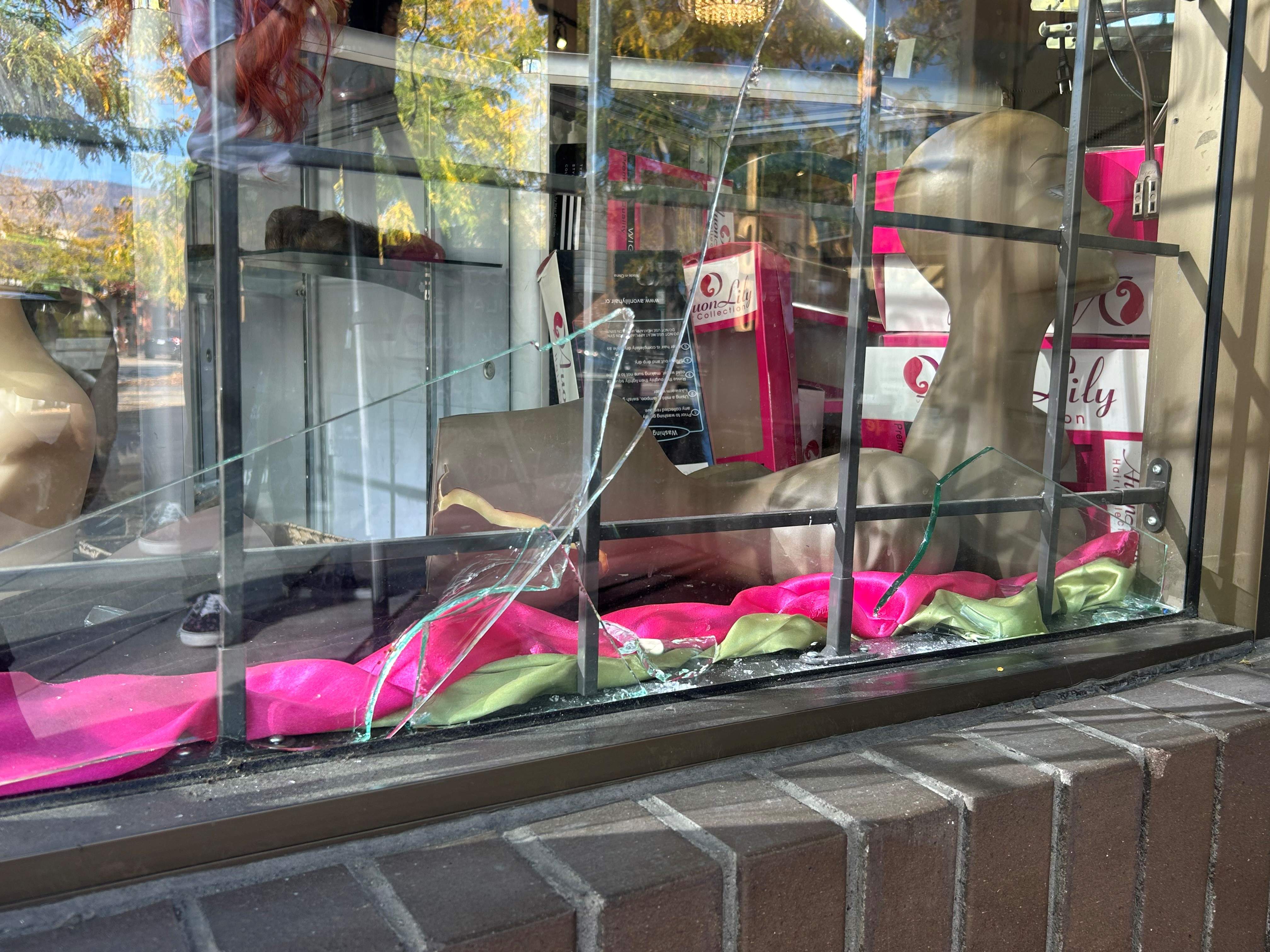
Shattered glass on a Tuesday morning isn't just a property repair bill. For Wendy Munyanyi, owner of Mary-Claris Hair Extensions in downtown Kelowna, it was the third time her storefront window was smashed in, leaving her to clean up the mess and tally up another nine hundred dollars in stolen custom wigs.
When criminals chuck a rock deep into a specialty shop at 7:15 in the morning, grab what they want, and casually tell a nearby worker they just "need a wig," local business owners realize that standard municipal promises are falling short. City halls talk about grants and camera registries. Main street operators live with the reality of recurring property crime.
Property crime in mid-sized Canadian hubs like Kelowna has morphed from a petty annoyance into an existential threat for independent shops. While politicians debate jurisdiction, security grants, and CCTV registry rollouts, entrepreneurs carry the financial and emotional weight of chronic break-ins.
The Gap Between Municipal Policy and Main Street Reality
The City of Kelowna rolled out safety initiatives following community forums, introducing security upgrade grants and a commercial CCTV registry designed to speed up RCMP response times. Officials point to increased downtown patrols and dedicated safety teams as proof that help is arriving.
Yet, for many business owners dealing with repeated targeting, those programs feel disconnected from daily operations. Grants don't stop a rock from flying through plate glass at dawn. Insurance rates spike after the second or third claim, making coverage unaffordable or practically useless for small retail margins.
Local leadership elections bring candidates forward with competing visions, ranging from expanded second-stage sober housing and stronger non-profit partnerships to heavier pressure on provincial and federal ministries for broader health and justice reforms. But structural shifts take years. Storefront windows need replacing today.
What Real Business Defense Looks Like Right Now
If you're running a storefront in an urban core facing rising property crime, waiting for systemic policy changes is a losing strategy. You have to lock down your perimeter based on what actually works on the ground.
- Upgrade to laminated or security-film glass that cracks under impact but doesn't easily shatter into open entryways. Standard plate glass is an open invitation.
- Move high-value inventory away from street visibility. If smash-and-grab thieves can't spot high-dollar items through the glass, they're far less likely to target your specific door.
- Build immediate communication loops with neighboring businesses. Street-level eyes and ears often spot suspicious behavior long before an alarm goes off or police arrive.
Municipalities need to stop treating street disorder as an isolated nuisance and start viewing small business retention as an emergency priority. Until real accountability hits the courts and adequate addiction and mental health housing supports are fully funded, downtown operators will keep sweeping up glass while waiting for a response that matches the scale of the crisis.