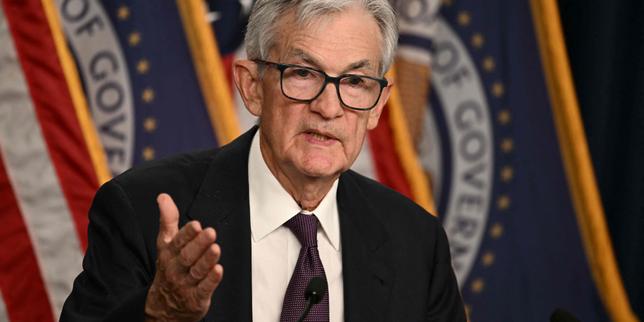
The long-standing institutional feud between Washington's political core and America's central bank just took another sharp turn. Donald Trump refuses to back down in his campaign against Jerome Powell, even though the Federal Reserve's internal watchdog explicitly cleared the former central bank chair of criminal wrongdoing or administrative misconduct.
If you expected an official inspector general report to quiet the tension, you haven't been paying attention to how modern executive power collides with independent financial governance. Trump immediately demanded Powell's immediate resignation from his separate seat on the Fed's Board of Governors, pointing to glaring oversight failures in a massive headquarters renovation project that ballooned past two billion dollars.
The Watchdog Report Findings
The core of the recent dispute centers on an extensive review by the Federal Reserve's Inspector General. The watchdog evaluated mounting cost overruns tied to the central bank's extensive headquarters renovation project in Washington. Critics note that the project's price tag climbed well past expectations, touching figures upwards of $2.5 billion, with estimates pointing even higher.
The inspector general's findings delivered a nuanced reality. On one hand, the investigation found no grounds for a criminal referral and no evidence of administrative misconduct by Powell. On the other hand, the report didn't hand out a clean bill of health. Investigators highlighted major administrative shortcomings, noting that the Fed board failed to secure a project cost estimate from its construction manager until January 2026—over three years after construction began and after billions had already been awarded. Furthermore, the board didn't establish a guaranteed maximum price early on, leaving the institution exposed to severe cost uncertainty.
The Political Backlash and Legal Threats
Donald Trump seized upon the report's criticisms immediately. Rather than focusing on the absence of criminal wrongdoing, the White House zeroed in on the administrative lapses and the ballooning budget. Trump instructed Attorney General Todd Blanche to study the findings closely and determine potential legal actions.
The administration threatened to sue Powell directly for corruption or incompetence if he refuses to step down voluntarily from the Board of Governors. Powell's term as Fed chair ended in May, but he legally retains his position as a member of the central bank's board. That distinction matters enormously because central bank governors enjoy structural protections designed to insulate monetary policy from short-term political whims.
Why Central Bank Independence Matters Now
Investors and economists watch these clashes with acute anxiety because institutional independence underpins global confidence in the U.S. dollar. When political leaders actively campaign to remove central bankers over administrative disputes or interest rate disagreements, financial markets twitch.
Historically, central bank boards operate as a firewall against inflationary pressures driven by political expediency. If an administration can force out board members over building overruns or policy disagreements, the entire premise of monetary independence erodes. Yet, critics argue that accountability shouldn't take a backseat just because an institution wears the badge of independence. Billions of dollars in public-adjacent funds require strict oversight, and the massive budget overruns at the Fed headquarters give political opponents a powerful rhetorical weapon.
What Comes Next for Monetary Governance
The showdown won't vanish anytime soon. Powell has weathered months of intense pressure, investigations, and public insults without yielding his board seat. Legal experts point out that removing a Fed governor requires proving specific statutory cause, a high bar that typically triggers prolonged federal court battles.
You can expect this fight to redefine how federal watchdogs evaluate independent agencies. Accountability and autonomy are currently locked in a brutal wrestling match in Washington, and neither side is willing to concede ground. Keep a close eye on upcoming Senate confirmations and potential Department of Justice filings, because the battle lines for the future of American monetary policy are drawn right here.