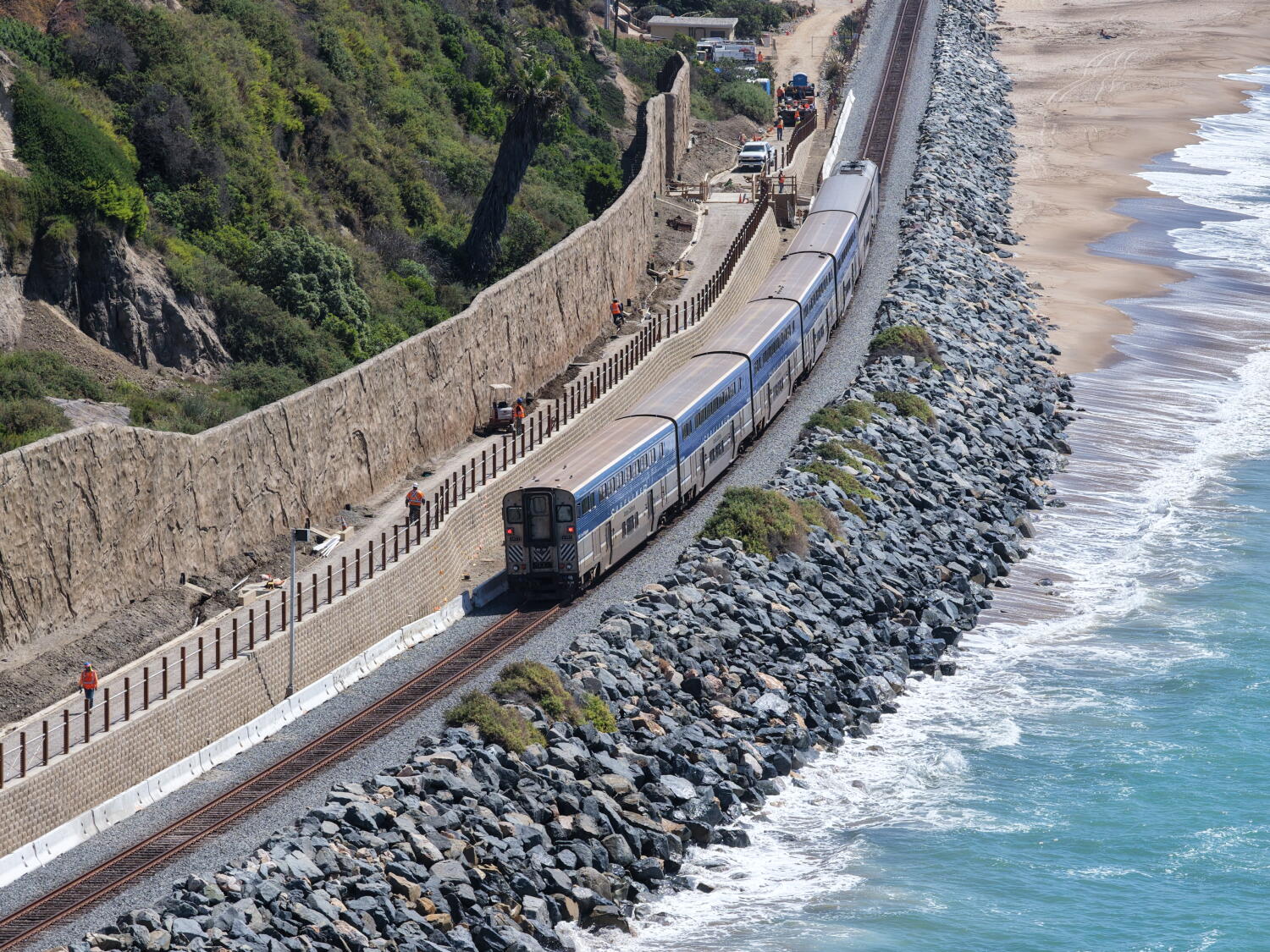
You love the view. The deep blue Pacific crashes inches from your window, sparkling under a golden California sun as the Amtrak Pacific Surfliner glides effortlessly down the coast. It feels civilized. It beats Interstate 5 gridlock every single day of the week.
Right now, that iconic window seat is built on borrowed time.
Powerful swells, aggressive coastal erosion, and a looming severe winter climate pattern are colliding right along the San Clemente coastline. Rail lines are snapping under the pressure. Trains are stopping dead in their tracks, forcing passengers onto makeshift bus bridges.
Can this legendary rail corridor survive what’s coming? Let's break down the actual reality behind the crisis.
The Geography That Makes It Magical Is Also Destroying It
The LOSSAN rail corridor connects San Diego, Orange County, and Los Angeles through some of the most expensive and breathtaking real estate in the country. But trains don't belong right on the edge of a crumbling sand cliff.
For decades, engineers have fought a losing battle against the ocean. When heavy storms arrive, surging tides chew away at the bluffs supporting the tracks.
Recent high tides have repeatedly overtopped ballast stones, undermined rail beds, and forced immediate emergency shutdowns between Oceanside and San Clemente. Crews scramble overnight to drop heavy riprap—piles of massive boulders—along the shoreline just to keep the tracks from sliding directly into the surf.
It’s a band-aid fix on an arterial wound.
What Travelers Need to Know Right Now
If you're planning a weekend trip down the coast this season, expect disruptions.
When closures hit, the Pacific Surfliner typically operates only as far south as San Juan Capistrano, while Metrolink cuts short at Laguna Niguel/Mission Viejo. Passengers heading further south are shoved onto crowded bus bridges connecting Irvine to Oceanside.
That means extra hours added to your trip. It means missed connections. It turns a relaxing coastal journey into a logistical headache.
If you commute daily or rely on this line for regular visits, you need a backup plan. Keep a close eye on service alerts from the Orange County Transportation Authority before leaving your house.
The Long-Term Fixes Cost Billions And Take Decades
Everyone agrees the tracks need to move. Relocating miles of track away from the fragile coastline inland through tunnels sounds simple on paper. In practice, it faces staggering political, financial, and environmental roadblocks.
Tunneling through local hillsides means dealing with unstable soil, fierce community opposition, and price tags soaring into the billions of dollars.
Until local agencies secure massive federal funding and push through years of environmental reviews, Southern California is stuck watching boulders tumble into the sea while passenger trains pause yet again.
The Pacific Surfliner is tough. Millions of riders depend on it. But grit alone won't hold back a rising ocean.
Check service updates before you buy a ticket. Have a flexible schedule if you travel the coast this winter.
El Niño Accelerates Coastal Erosion in Southern California
This short video explains how recent weather patterns and rising tides are accelerating coastal erosion along Southern California beaches.