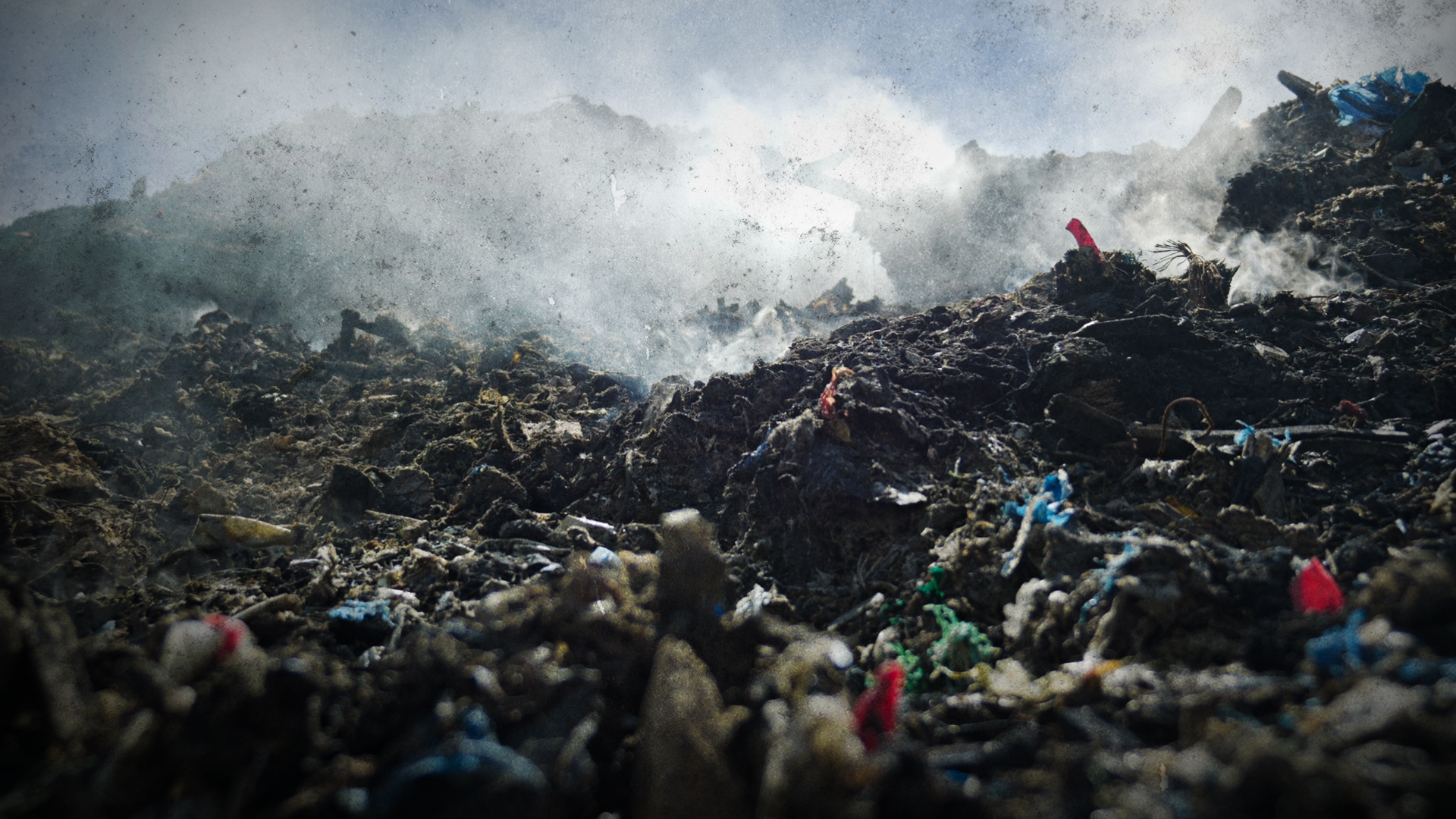
Walk past a padlocked field in the English countryside and you might just smell rotting domestic rubbish or burning rubber. Walk closer, and you're potentially breathing in a cocktail of banned pesticides, industrial solvents, and heavy carcinogens.
It's happening right now across Britain.
I've spent years tracking environmental policy and public health enforcement, and the current reality on the ground is grim. Illegal dumping used to mean a couple of old mattresses tossed in a layby. Today, organised criminal syndicates dump tens of thousands of tonnes of hazardous waste onto farmland, industrial units, and floodplains. They walk away with millions in cash while leaving local residents to live beside toxic time bombs.
When testing at three major illegal dump sites in England—Gloucester, Wigan, and Ranskill—revealed hundreds of airborne and waterborne chemicals, it confirmed what environmental scientists have feared for a decade. We aren't just dealing with an eyesore or a local nuisance anymore. We're looking at a national public health crisis in slow motion.
What Is Actually Hiding in These Sites
To grasp how dangerous these illegal dumps are, you have to look past the piles of shredded plastic and crushed drywall. The real danger is invisible.
Sky News recently partnered with scientists from Oxford Indices to conduct chemical testing across soil, air, and water samples at three notorious illegal sites. The findings were terrifying.
Take the Over Farm site in Gloucester. Over 100,000 tonnes of mixed waste have been festering there for more than seven years. When scientists analysed the fumes coming off the heap, they found almost four times as many distinct chemical compounds as you would find in an average car exhaust pipe. The air around the farm contained volatile organic compounds consistent with burning fuels, plastics, paints, resins, and chlorinated materials. Because the dump regularly ignites spontaneously—fire crews were called back out just recently—those fumes blow straight across nearby homes and crops.
Up in Ranskill, near Doncaster, a 55,000-tonne dump yielded even darker results. Air samples picked up a strong match for carbon tetrachloride. That's a volatile compound banned in consumer products years ago because it causes liver damage, kidney failure, and cancer. Testing at the same site uncovered traces of thanite, an agricultural pesticide that hasn't been legal in the UK for decades.
Over at the Wigan site, testing identified a fingerprint for demeton-O, another banned pesticide known for high toxicity to human and animal life. They also found P-tert amylphenol, an industrial compound classified for chronic aquatic toxicity that disrupts the endocrine system.
When you add it all up, these sites aren't just rubbish heaps. They're unmonitored chemical reactors sitting in open air.
The Toxic Mixture Threat Nobody Is Prepared For
When regulators talk about chemical safety, they usually measure one specific chemical against a safe legal threshold. That approach fails completely when applied to illegal waste.
At all three tested sites, the vast majority of water samples showed chemical concentrations exceeding Predicted No-Effect Concentration (PNEC) levels. That's the scientific threshold above which damage to surrounding ecosystems begins. Water tested at Gloucester ran straight into a floodplain feeding the River Leadon and the River Severn. In all three locations, researchers picked up triisopropyl phosphate—a plasticizer component that is exceptionally toxic to aquatic life.
I spoke with the broader research context around environmental toxicology to understand why this matters so much. Dr Patrick Byrne, a researcher specializing in environmental pollution at Liverpool John Moores University, pointed out something crucial about these findings. He noted that seeing a massive cocktail of dozens of different contaminants is actually far more concerning than finding one single chemical at a high concentration.
Why? Because traditional toxicology knows how to treat or evaluate single-chemical exposures. We have decades of safety data on individual substances. What we don't have is a reliable playbook for what happens when a human body or an ecosystem absorbs forty different low-dose toxins simultaneously.
Dr Ian Mudway, an associate professor of environmental toxicology at Imperial College London, has repeatedly emphasized that low-level chemical exposure over long periods causes health problems nobody predicted decades ago. When you live downwind of a 100,000-tonne burning pile, you aren't breathing one substance. You're breathing a constantly changing mix of synthetic compounds, combusted plastics, and heavy metals.
Honest truth? The regulatory framework simply wasn't designed to handle this level of chemical chaos.
How Criminal Gangs Turned Rubbish Into the New Narcotics
You might wonder how someone manages to dump 100,000 tonnes of hazardous garbage on a farm without being stopped instantly.
The answer is simple. Money.
The Environment Agency itself has described waste crime as "the new narcotics." Organised crime networks realized a few years ago that smuggling drugs carries massive prison sentences, whereas illegally dumping waste carries a low risk of getting caught and staggering profit margins.
Here's basically how the scam works:
- A legitimate-looking rogue operator sets up a waste management firm or leases land from an unsuspecting landowner under the guise of agricultural storage.
- They approach legitimate businesses, construction sites, and local authorities, offering to clear waste for £50 to £100 less per tonne than legal landfill operators charge.
- They collect millions in processing fees and landfill tax exemptions upfront.
- Instead of taking the waste to licensed treatment facilities, they haul it to an open field, compress it, pack it tight, and abandon the lease.
- The criminals disappear overnight with millions in cash, leaving the landowner, the local council, and the taxpayer with a £10 million cleanup bill.
Because these criminal gangs operate with zero oversight, they accept anything. Industrial chemical drums, asbestos sheeting, commercial paints, agricultural run-off, medical waste, and shredded municipal garbage all get dumped together in massive unlined pits.
Unlike modern legal landfills, these illegal sites don't have thick impermeable synthetic liners beneath them. They don't have leachate collection pipes to suck up toxic liquids. They don't have methane flare vents to burn off gases safely. When it rains, water trickles down through thousands of tonnes of hazardous waste, picking up heavy metals and synthetic chemicals, before soaking directly into the local water table.
Why Landowners and Communities Are Left Helpless
If you wake up one morning and find that a tenant has surreptitiously dumped 30,000 tonnes of waste on your field, you enter a legal nightmare.
Under current English law, the responsibility for clearing illegal waste often falls back onto the private landowner if the criminal operators vanish. But clearing a site like Over Farm or Ranskill doesn't cost thousands of pounds. It costs millions. A full remediation requires hazardous material teams, specialized transport, soil scraping, and expensive hazardous-landfill disposal fees.
Most private farmers or small property owners don't have £5 million sitting in a bank account. So what happens?
The waste sits there. For years.
Gloucester's Over Farm site has been festering for over seven years. While bureaucrats write letters, file court motions, and debate who should foot the bill, the site decomposes. It catches fire. It leaks into the floodplain. Local residents complain of burning eyes, respiratory irritation, chronic nausea, and relentless foul odours, but they're trapped in an administrative stalemate between local councils, the Environment Agency, and private property rights.
The Environment Agency has seen its operational funding for enforcement pinched over the past decade. While they've recently launched specialized drone units and targeted enforcement actions, the sheer volume of illegal sites popping up across the UK far outpaces their capacity to investigate and clean them up.
The Long-Term Health Risks We Are Ignorantly Risking
We can't treat these dumps like static piles of trash. They are active, shifting sources of airborne toxins and soil degradation.
When organic material rots inside an unmanaged dump alongside industrial solvents, it creates heat. Deep inside the pile, temperatures rise until the waste begins to smoulder beneath the surface. This underground smouldering can go on for months without producing open flames, steadily releasing hazardous fumes into the air.
Living near these sites exposes local populations to three distinct health risks:
Airborne Inhalation Risks
When plastics, resins, and chlorinated materials burn at low temperatures without industrial scrubbers, they release dioxins, furans, and volatile organic compounds (VOCs). Short-term exposure leads to asthma flare-ups, severe headaches, and eye irritation. Long-term exposure to compounds like carbon tetrachloride is directly linked to chronic kidney damage, liver toxicity, and an elevated risk of developing cancers.
Drinking Water and Agricultural Contamination
Leachate—the liquid that drains from a landfill—doesn't stop at the property boundary. It migrates into shallow aquifers and local river networks. When chemicals like triisopropyl phosphate reach agricultural irrigation systems or local waterways, they enter the food chain and destroy freshwater ecosystems. In nearby cattle grazing fields, leached industrial waste has historically been linked to livestock illness and groundwater contamination.
Endocrine Disruption
Chemicals like P-tert amylphenol act as xenoestrogens in the body. They mimic natural hormones, tricking the endocrine system. Exposure to endocrine disruptors, even at seemingly tiny concentrations, can interfere with reproductive health, developmental processes in children, and metabolic function over time.
What Needs to Change Immediately
Fixing Britain's illegal waste emergency requires a fundamental shift in how we treat waste crime. We need to stop treating it as an administrative civil breach and start prosecuting it as major corporate environmental crime.
Here is what practical reform looks like:
- Stricter Custodial Sentences: Criminal ringleaders who profit millions from illegal tipping must face mandatory prison sentences comparable to major drug traffickers, rather than minor fines that are treated as a basic cost of doing business.
- Direct Government Intervention Funds: The Environment Agency must be empowered to clean up high-risk toxic sites immediately using a national emergency fund, recovering the costs from criminals later rather than leaving toxic sites sitting next to residential communities for seven years.
- Mandatory Supply-Chain Tracking: Waste producers must be held legally accountable for tracking their waste digitally from cradle to grave. If a commercial construction firm hands over hazardous waste to an unlicensed rogue hauler because it was cheap, that firm should share legal liability for the cleanup.
- Enhanced Air and Water Monitoring: Local authorities near known illegal sites must deploy continuous real-time air quality monitors to warn nearby residents when volatile organic compounds spike during underground fires.
Practical Steps If You Live Near an Illegal Dump
If you suspect an illegal waste dump is operating near your community or you live downwind of a known site, don't wait for official notices to protect yourself. Take these immediate actions:
- Report Active Tipping Instantly: If you see unmarked heavy goods vehicles tipping waste on private land or in rural areas late at night, report it immediately to the Environment Agency hotline (0800 80 70 60) and your local council's environmental health department.
- Document Physical Symptoms: Keep a detailed diary of any unexplained health symptoms—such as respiratory distress, unusual rashes, persistent headaches, or throat irritation—along with the date, time, wind direction, and any visible smoke or strong chemical odours coming from the site. Share this record directly with your local GP and public health team.
- Avoid Local River and Groundwater Use: If you rely on private borehole water or live adjacent to streams running off an unlined waste site, have your water independently tested for volatile organic compounds and heavy metals before using it for cooking, drinking, or watering livestock. Avoid letting pets or livestock drink from nearby open streams.
- Push for Local Health Assessments: Contact your local MP and district councillor to demand formal multi-agency air and soil testing under the Environmental Protection Act 1990. Public pressure is frequently the single biggest driver in forcing local authorities to prioritize immediate site containment.