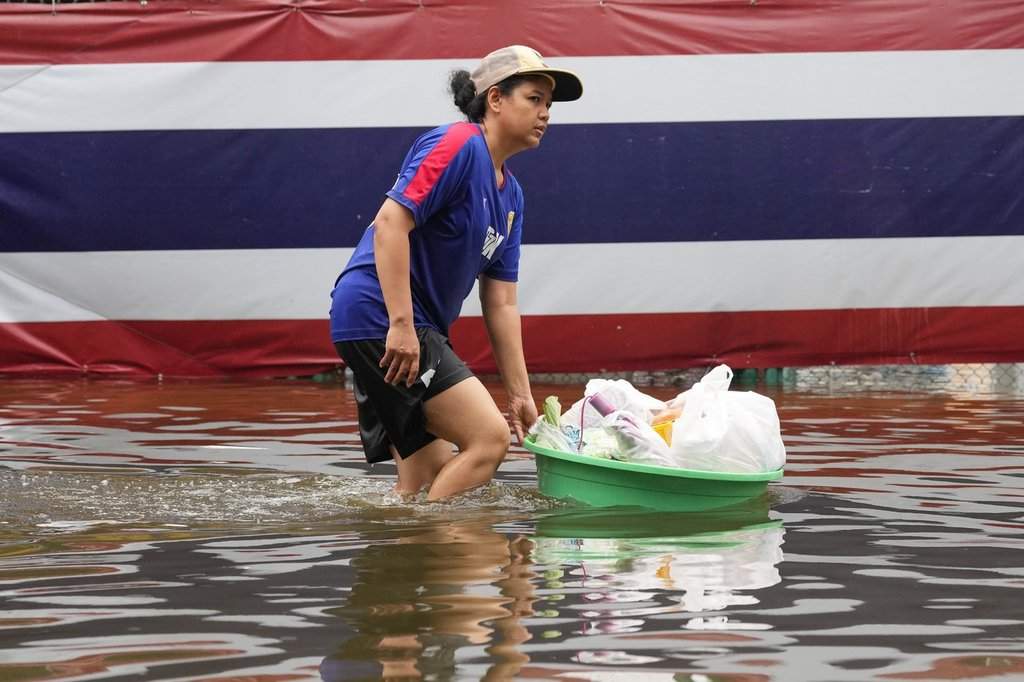
The skies over Bangkok finally cleared on Sunday, but thousands of residents aren't celebrating. They're still wading through knee-deep water, wondering when their living rooms will dry out.
If you look at surface reports, you'd think this was just another tropical downpour that overstayed its welcome. Accumulated rainfall topped 30 centimeters in many districts over ten brutal days, and eight people lost their lives nationwide. But pointing at the clouds misses the real crisis. Bangkok's urban design is fighting a losing battle against geography, concrete, and rising tides.
Let's look at what's actually happening on the ground.
The Drainage Trap
When Governor Chadchart Sittipunt talks about high water levels in the city's main canals, he's describing a hydraulic bottleneck. Bangkok sits on a delta just about 1.5 meters above sea level. It's basically a giant bowl made of asphalt.
When over 30 centimeters of rain drops in a short span, drainage pumps work overtime. But gravity refuses to cooperate. If the canals are already swollen with runoff flowing down from northern provinces, pumps have nowhere to push the city's water.
Over 200 temporary shelters had to open across the capital, housing roughly 3,000 evacuees by Sunday. Thirty-one major roads remained impassable. Transport networks fractured. Long-distance trains and bus lines ground to a halt while airports managed heavy delays. Commuters learned what happens when a mega-city runs out of dry pavement.
Beyond the Capital
The capital gets the headlines, but the rest of the country takes the heaviest hit. Prime Minister Anutin Charnvirakul pointed out that incessant rainfall completely overwhelmed regional drainage capacities.
More than 545,000 people across 25 other provinces felt the squeeze, particularly in central and eastern farming regions. Rice paddies turned into lakes. Rural infrastructure crumbled under rushing torrents. While city dwellers complain about ruined shoes and gridlock, farmers watch entire seasonal harvests wash away.
What Actually Needs to Change
City officials are working to drain the streets as fast as humanly possible, but emergency pumping is a Band-Aid fix. You can't out-pump a sinking city. Bangkok is literally subsiding by a couple of centimeters every year due to groundwater extraction and heavy concrete construction.
If you're planning a trip to Thailand during monsoon season or tracking regional disaster management, keep these realities in mind:
- Check canal levels, not just the weather forecast: Surface rain can stop completely, but urban flooding can peak days later as water funnels down from higher elevations.
- Avoid low-lying suburbs: Suburban districts like those on the outer eastern and northern fringes catch the runoff first and drain last.
- Factor in transit disruptions: Main roads and rail lines clear slowly once sub-basement drainage networks lock up.
The rain has eased for now, but the water has nowhere fast to go. Until urban planners rethink how water moves through a concrete delta, Bangkok will keep fighting the same flood every single year.